
There’s something magical about a well-designed sitting room—it’s that special corner where morning coffee tastes better, conversations flow easier, and even solo reading time feels like a luxury.
Whether you’re working with a compact apartment nook or a spacious family room, the right design choices can transform any sitting area into your favorite retreat.
Sitting Room Decorating Ideas
From warm minimalist havens to richly layered bohemian escapes, these 14 sitting room ideas blend style with soul.
Think plush textures, inviting color palettes, and those little details that make a space feel uniquely yours. Ready to reimagine your sitting room into a place that welcomes you home every single day?
Quick Ideas Summary
- Scandinavian Simplicity pairs light woods with neutral tones for an airy, clutter-free feel
- Velvet Luxury adds depth through rich jewel tones and sumptuous textures
- Coastal Breeze brings beach vibes indoors with soft blues and natural materials
- Mid-Century Modern balances vintage charm with clean, functional lines
- Layered Bohemian creates warmth through mixed patterns and global-inspired textiles
- Monochrome Sophistication proves one color family can make a powerful statement
- Garden Room Vibes blurs indoor-outdoor boundaries with greenery and natural light
1. Scandinavian Simplicity with Warm Woods
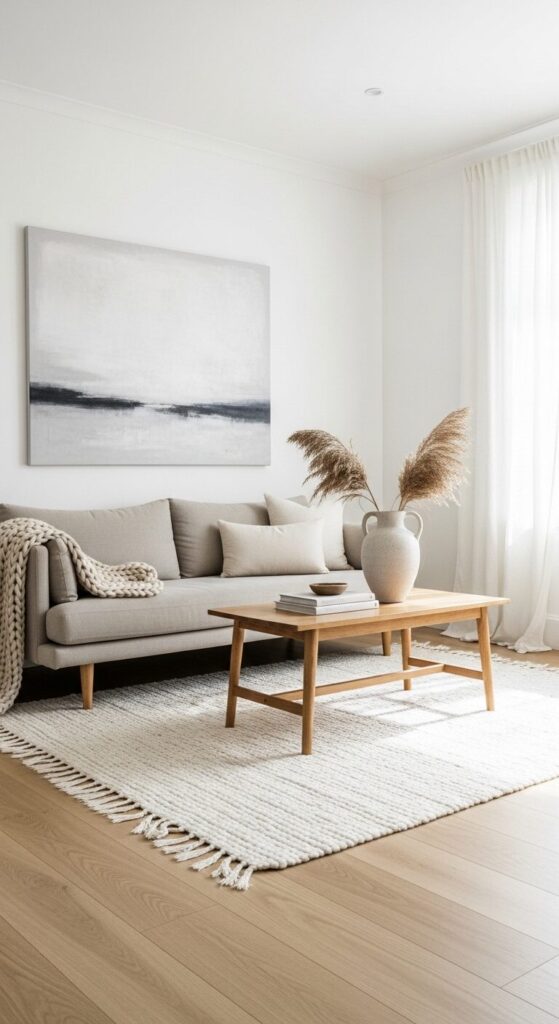
Picture a room bathed in soft natural light, where pale oak floors stretch beneath a low-profile sofa in oatmeal linen. The walls are crisp white, accented by a single oversized abstract print in muted grays.
A chunky knit throw drapes casually over the armrest, while a simple ceramic vase holds dried pampas grass on a minimalist coffee table.
This look thrives on restraint and quality over quantity. Choose furniture with clean lines and exposed wooden legs, keeping everything low to the ground to maintain that airy Scandinavian feel.
Add warmth through natural materials—wool rugs, linen cushions, and untreated wood accessories. The key is editing ruthlessly: every piece should earn its place.
Texture becomes your secret weapon here. Layer different weaves and natural fibers to prevent the space from feeling cold. A sheepskin rug over hardwood, nubby cushions against smooth upholstery, and matte ceramics beside brushed metals all add visual interest without clutter.
How to Achieve This Look: Start with a neutral base palette of whites, beiges, and soft grays. Invest in one quality sofa in a natural fabric, then build around it with wooden accents and minimal decor.
Keep surfaces clear except for one or two statement pieces, and let natural light be your main decorator.
2. Moody Jewel Tones with Velvet Textures
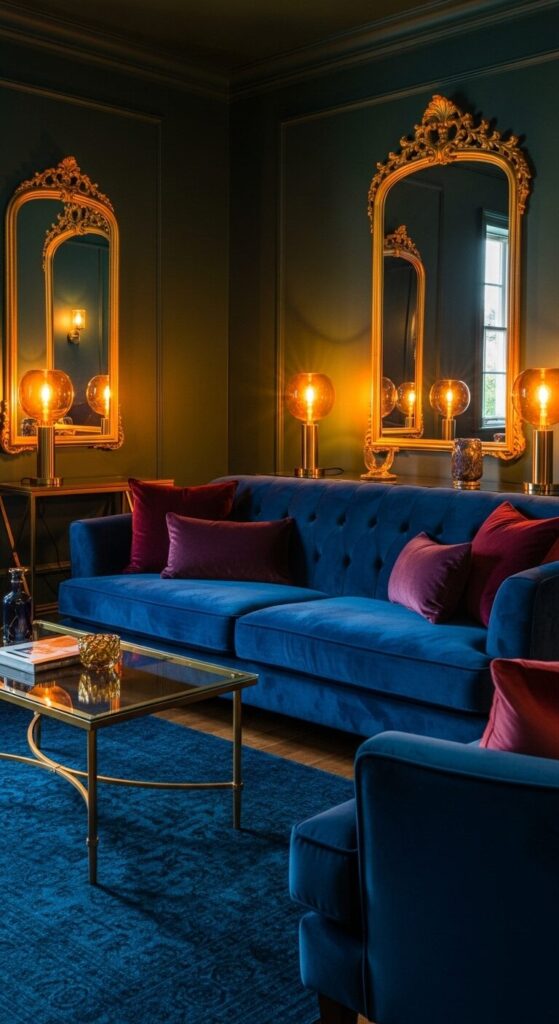
Imagine walls painted in deep emerald green, complemented by a sumptuous velvet sofa in sapphire blue.
Gold-framed mirrors catch the warm glow from amber table lamps, while burgundy cushions add another layer of richness. The space feels cocooning yet elegant, like stepping into a jewel box.
Velvet transforms any sitting room into something special, catching light differently throughout the day and adding instant luxury.
Mix jewel tones intentionally—emerald with navy, plum with teal—but anchor them with metallics in brass or gold to tie everything together. The darkness of the walls actually makes the room feel more intimate rather than smaller.
Balance is everything in a moody space. Too many dark surfaces can feel heavy, so break them up with reflective elements like mirrors, glass coffee tables, or metallic accessories.
Add plenty of warm lighting through multiple sources—table lamps, floor lamps, and candles—to create depth and prevent shadows from taking over.
Style Tip: Paint just one accent wall in your jewel tone if you’re hesitant about going full drama. Layer three different velvet pieces in complementary colors—maybe a sofa, ottoman, and cushions—and finish with brass or gold hardware on furniture and light fixtures for that elevated touch.
3. Coastal Calm with Ocean-Inspired Hues
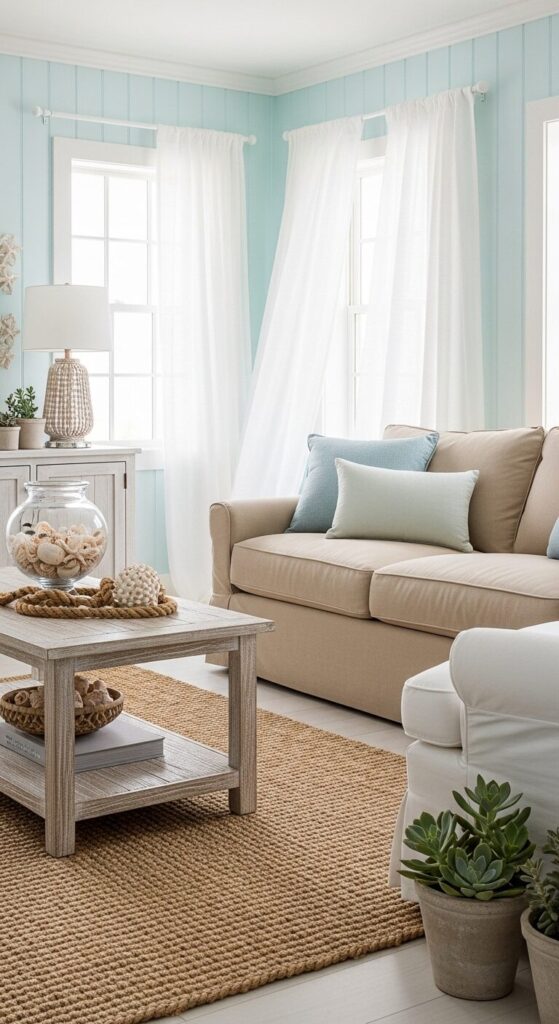
Soft blues and sandy beiges create a breezy atmosphere where whitewashed wooden furniture sits on a jute rug. Sheer white curtains filter sunlight, casting gentle patterns across walls painted in pale aqua.
Natural elements like driftwood, seashells in glass vessels, and rope-wrapped accents bring the seaside indoors without feeling kitschy.
The coastal look works because it taps into our innate desire for calm and simplicity. Choose furniture with a weathered or distressed finish to capture that beachy, lived-in feel. Incorporate stripes sparingly—think nautical without being literal. Natural fiber rugs in jute or seagrass add texture while maintaining the organic, relaxed vibe.
Keep metals light—brushed nickel or weathered silver rather than heavy bronze. Add living elements like potted palms or succulents in ceramic planters.
The goal is creating a space that feels like a perpetual vacation, where stress melts away the moment you walk in.
Recreate the Vibe: Layer different shades of blue from pale sky to deeper ocean tones through cushions and throws.
Choose a slipcovered sofa in white or natural linen that can be easily cleaned. Add woven baskets for storage that doubles as decor, and hang lightweight linen curtains that move with the breeze.
4. Mid-Century Modern with Statement Pieces
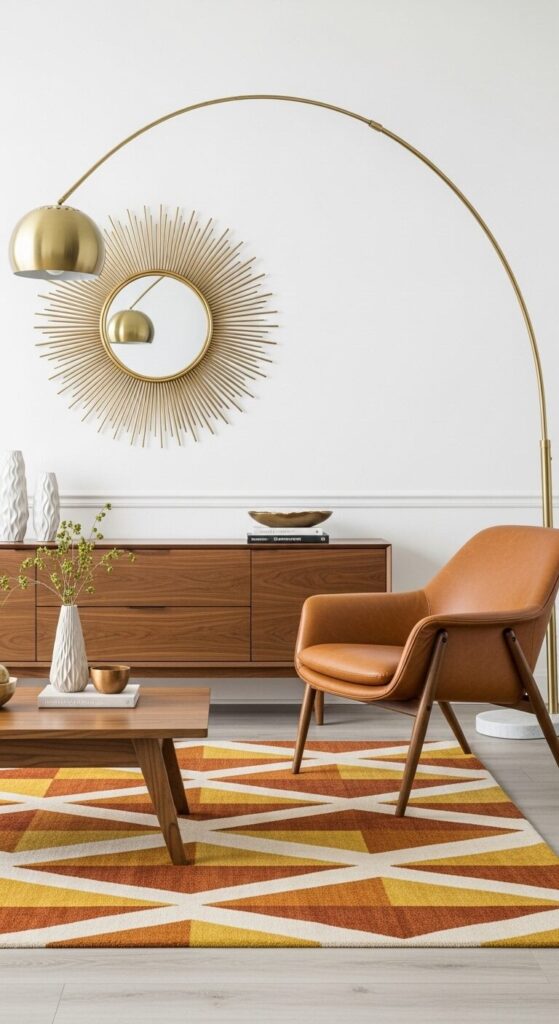
A low-slung walnut credenza sits beneath a sunburst mirror, flanked by a leather lounge chair with tapered wooden legs.
The color palette centers on warm woods, burnt orange, and mustard yellow accents against white walls. Geometric patterns appear in the area rug and throw pillows, while a sculptural floor lamp provides both light and art.
This timeless style celebrates craftsmanship and clean design. Look for furniture with exposed wooden frames, angled legs, and organic shapes that were hallmarks of the 1950s and 60s.
The beauty lies in simplicity—each piece makes a statement without competing for attention. Mix authentic vintage finds with quality reproductions for an authentic yet affordable approach.
Color plays a supporting role, adding warmth and personality through carefully chosen accents. Mustard, teal, burnt orange, and olive green all capture the era’s spirit.
Keep larger pieces neutral, then have fun with smaller accessories and textiles that can easily be switched out.
Get the Look: Invest in one iconic mid-century piece like an Eames-style chair or a vintage credenza—this becomes your room’s anchor.
Add a geometric rug in muted colors, then bring in warmth through wood tones in different finishes. Choose lighting with sculptural interest, and display a few carefully curated objects rather than cluttering surfaces.
5. Layered Bohemian with Global Textiles
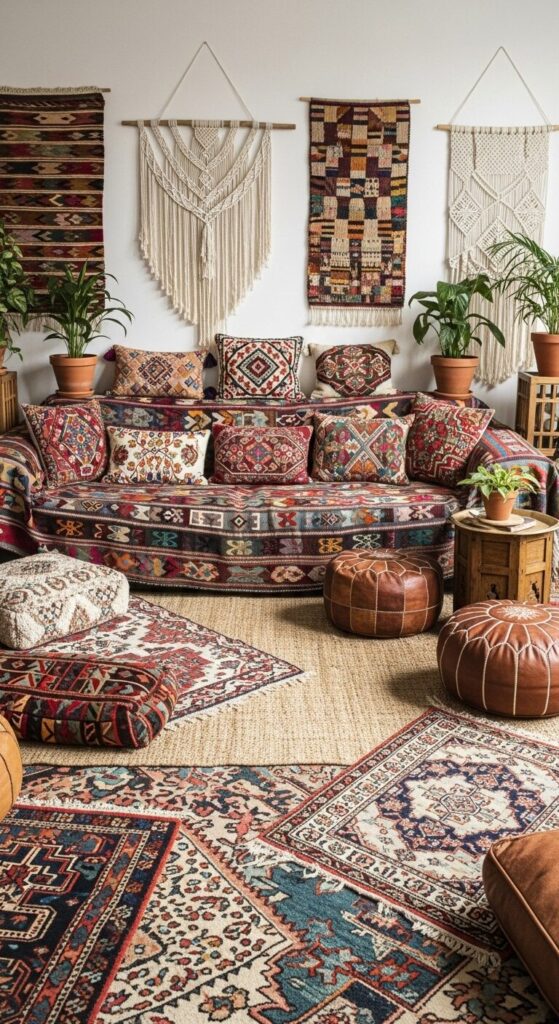
Imagine a space where a low Moroccan pouf sits beside an overstuffed sofa draped in kilim throws and embroidered cushions.
Macramé wall hangings mix with vintage tapestries, while a collection of potted plants in varying heights adds life. The floor is layered with multiple rugs in complementary patterns, creating warmth and visual richness.
Bohemian style celebrates collected-over-time rather than bought-all-at-once. Mix patterns freely—florals with geometrics, ikat with stripes—united by a cohesive color story.
The key is abundance without chaos: layer generously but maintain some visual breathing room. Incorporate handmade and artisan pieces that tell stories and add authenticity.
Plants are non-negotiable in boho spaces. They add life, color, and that organic element that ties everything together.
Display them in vintage brass planters, hanging macramé holders, or ceramic vessels collected from travels or thrift stores.
Bring This Style Home: Start with a neutral sofa that can handle lots of accessories, then go wild with textiles—layer throws, pile on cushions in mixed patterns, and overlap rugs.
Add a hanging chair or floor cushions for extra seating. Shop vintage markets for unique finds like brass trays, woven baskets, and ethnic textiles. String up some fairy lights or add Moroccan lanterns for magical evening ambiance.
6. Monochrome Magic in Shades of Gray

A sophisticated sitting room unfolds in layers of gray, from charcoal walls to silver cushions and dove-gray upholstery.
Different textures prevent monotony—a shaggy rug, smooth leather ottoman, linen curtains, and velvet throw pillows all in varying shades of the same color family. Chrome and glass accents add sparkle without introducing new colors.
Monochrome doesn’t mean boring when you play with texture and tone. Moving from light to dark creates depth and dimension, guiding the eye through the space.
This approach actually makes rooms feel larger because there’s no visual interruption—the eye travels smoothly across all surfaces.
Lighting becomes crucial in monochrome schemes. Layer multiple light sources to prevent flatness, using warm bulbs to keep gray from feeling cold.
Add one metallic—chrome, silver, or even brushed nickel—throughout the space for cohesion and a touch of glamour.
Make It Yours: Choose three to five shades within your color family, from lightest to darkest. Use the darkest on one accent wall or in smaller doses through cushions and accessories.
Keep larger pieces in mid-tones, and use the lightest shades for curtains or larger textiles. Add plenty of texture through woven baskets, cable-knit throws, and varied upholstery fabrics.
7. Garden Room with Indoor Greenery
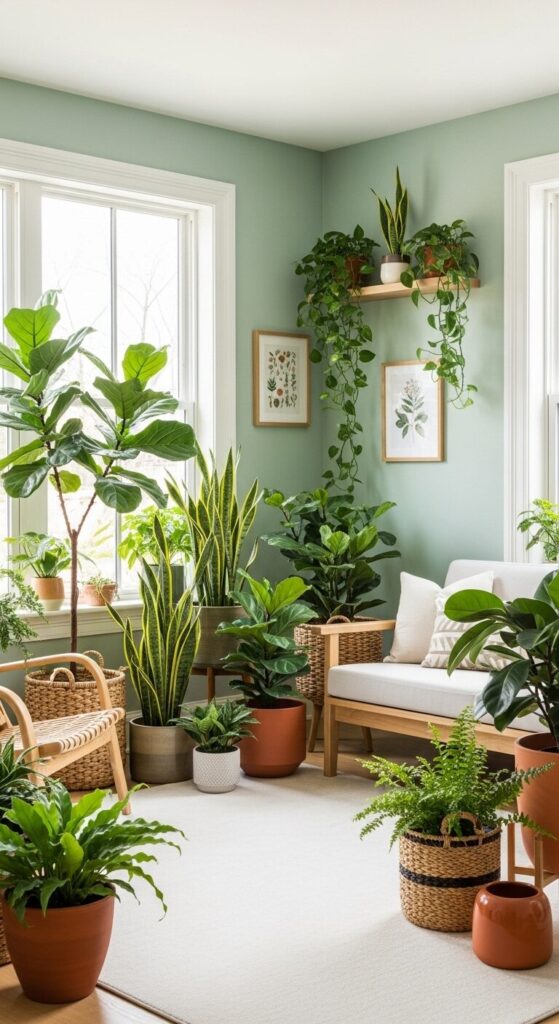
Large windows overlook lush views while inside, plants of all sizes create a mini urban jungle.
A sage green accent wall complements the verdant display, while natural wood furniture in light oak keeps the space grounded. Botanical prints in simple frames echo the living plants, and a rattan chair adds that perfect organic touch.
Bringing nature indoors isn’t just beautiful—it actually improves air quality and mood. Create levels by placing plants at different heights using stands, hanging planters, and floor pots.
Mix leaf shapes and sizes for visual interest, from trailing pothos to structured snake plants and delicate ferns.
The key to a garden room is commitment—plants need care, so choose varieties suited to your light conditions and lifestyle.
Low-maintenance options like pothos, snake plants, and philodendrons thrive on neglect while still looking lush.
Try This at Home: Start with five to seven plants in varying sizes and place them throughout the room rather than clustering them all together.
Choose planters in complementary materials like terracotta, ceramic, and woven baskets. Add one or two trailing plants on high shelves or in hanging planters.
Paint one wall in a muted green or sage to complement your living decor, and incorporate botanical artwork or pressed leaf frames.
8. Industrial Chic with Raw Materials

Exposed brick walls provide texture behind a leather Chesterfield sofa, while metal-framed shelving displays curated objects.
Edison bulb pendants hang from black cords, casting warm light across concrete-look flooring. The palette stays masculine and moody—black, brown, gray, and aged metallics—with warmth coming from the leather, wood, and vintage finds.
Industrial design celebrates materials in their raw state. Don’t hide imperfections—embrace them as character.
Look for furniture with visible hardware, metal frames, and reclaimed wood. The style walks the line between warehouse and refined, rough and polished.
Balance is essential to prevent industrial from feeling too cold or harsh. Soften metal and concrete with plenty of textiles—throw blankets, cushions, and area rugs.
Add warmth through wood tones and brass or copper accents alongside the dominant black metal.
Design It Yourself: If you don’t have exposed brick, consider brick-effect wallpaper or leaving one wall with visible concrete. Choose furniture with metal frames and distressed wood or leather upholstery.
Add industrial-style lighting with visible bulbs and black or bronze fixtures. Include vintage factory finds like metal lockers, wooden crates, or old signage as unique storage solutions. Layer in warmth with a large area rug and plenty of cushions in neutral tones.
9. Rustic Farmhouse with Shiplap Details
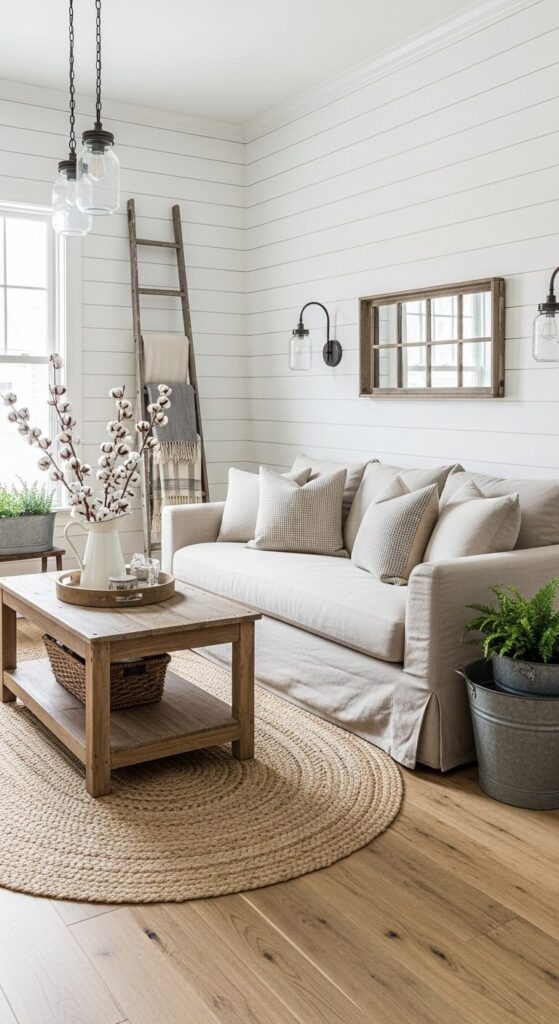
Horizontal shiplap walls painted in soft white create the perfect backdrop for overstuffed furniture in natural linen and cotton.
A distressed wood coffee table sits on a braided jute rug, while vintage milk cans repurposed as side tables add authenticity. Galvanized metal accents and mason jar lighting fixtures complete the pastoral charm.
Farmhouse style balances rustic elements with comfort. It’s lived-in and welcoming, never too precious or formal. Mix old and new freely—a vintage church pew beside a modern slipcovered sofa, antique crates used for storage alongside contemporary cushions.
Keep the color palette soft and neutral with plenty of whites, creams, and natural wood tones. Add character through vintage finds and flea market treasures that look like they’ve been collected over generations.
Small touches like cotton stems in pitchers, old books stacked on tables, and wooden bowls filled with seasonal elements add warmth.
Put the Look Together: Start with shiplap or planked walls—even one accent wall makes an impact. Choose furniture with loose, comfortable slipcovers in white or natural linen that can be thrown in the wash.
Add vintage wooden pieces like ladders, crates, or old doors repurposed as decor. Include galvanized metal through planters, buckets, or light fixtures. Layer in texture with jute rugs, cotton throws, and linen cushions, keeping everything soft and neutral.
10. Japandi Fusion of East Meets West

Clean lines meet organic forms in this harmonious blend where a low platform sofa in charcoal linen faces a minimalist wooden coffee table. Shoji screen-inspired panels filter light while maintaining privacy.
The palette stays muted—black, white, gray, and natural wood—with greenery providing the only pops of color. Every object has purpose and breathing room.
Japandi combines Japanese minimalism with Scandinavian functionality, creating spaces that feel both serene and livable.
The philosophy centers on quality over quantity, with each piece carefully chosen for beauty and utility. Embrace negative space as an active design element rather than emptiness to fill.
Natural materials dominate, from light woods like oak and ash to linen, cotton, and clay. Handcrafted items add soul—ceramic vessels, woven baskets, hand-thrown pottery. The imperfect beauty of wabi-sabi celebrates materials that show age and use.
How to Style This Scene: Declutter ruthlessly and keep only what serves a purpose or brings joy. Choose furniture with clean, simple lines in natural wood with minimal ornamentation.
Use a muted color palette of neutrals with one or two organic accent colors. Add handmade ceramics, woven elements, and simple greenery in understated containers. Create zones of negative space to let each piece breathe and maintain that essential sense of calm.
11. Glamorous Art Deco with Metallic Accents
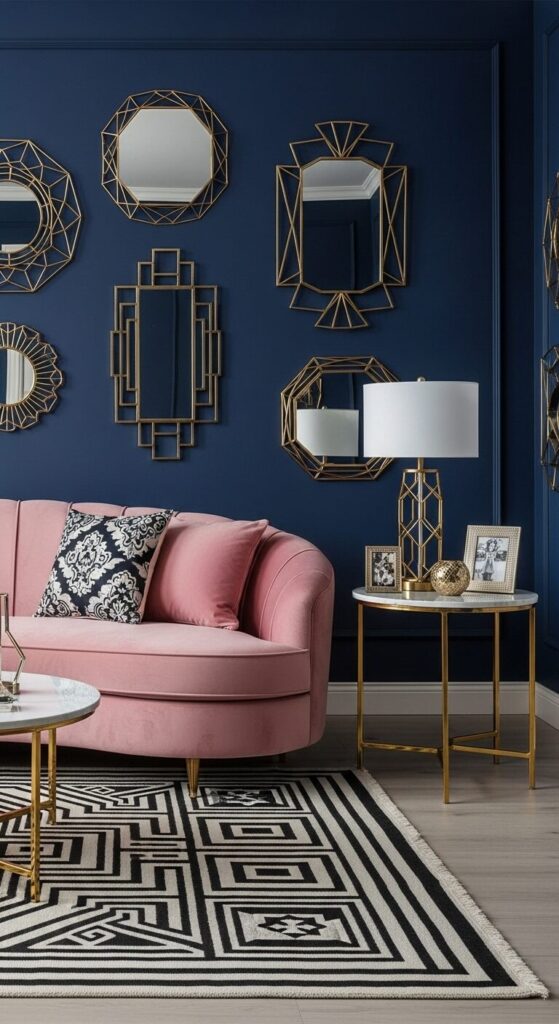
Rich navy walls provide drama behind a curved velvet sofa in blush pink. Geometric mirrors in brass frames multiply light while a marble-topped side table supports a table lamp with a geometric gold base.
The overall effect channels 1920s elegance—luxurious, symmetrical, and unabashedly opulent.
Art Deco celebrates luxury through geometric patterns, rich colors, and metallic finishes. It’s about glamour and sophistication, making bold statements through symmetry and shine.
Look for furniture with curved lines, mirrored surfaces, and jewel-tone upholstery.
The color palette typically pairs deep, saturated hues—navy, emerald, burgundy—with metallics in gold, brass, or chrome.
Black and white geometric patterns add visual punch through rugs or cushions. Every surface should have a luxe quality, whether velvet upholstery, marble tabletops, or lacquered finishes.
Create the Look: Paint walls in a deep, saturated color or use metallic wallpaper with geometric patterns. Invest in one curved piece of furniture upholstered in velvet or silk. Add multiple mirrors—the more geometric and ornate the frames, the better.
Layer in metallics through lighting, side tables, and accessories, sticking to one metal finish for cohesion. Include geometric patterns through rugs, cushions, or artwork, and don’t shy away from ornate details and luxury materials.
12. Eclectic Mix of Patterns and Periods
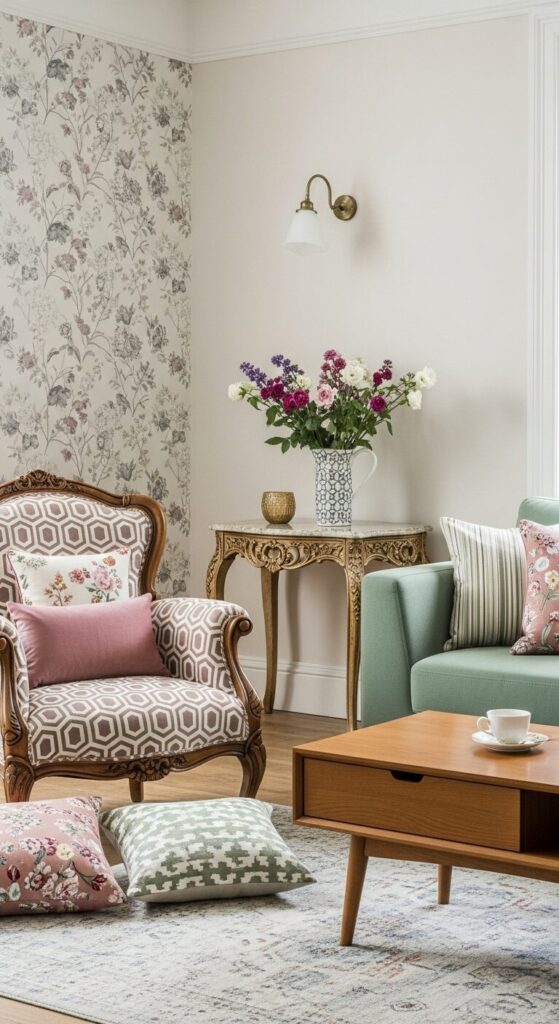
A Victorian armchair recovered in modern geometric fabric sits beside a sleek contemporary sofa. Floral wallpaper in muted tones covers one wall while the others stay neutral.
The coffee table is mid-century, the side table is baroque, and somehow it all works together. The secret lies in a cohesive color palette threading through all the disparate elements.
Eclectic design celebrates personality and collected treasures from different eras. The beauty is in unexpected combinations that shouldn’t work but do.
Rules can be broken when there’s intention behind the choices and some unifying elements tie everything together.
Start with a consistent color story—maybe dusty rose, sage green, and cream—then mix freely within that palette. Vary scales and patterns but keep them in your chosen colors.
Balance ornate with simple, mixing a heavily detailed piece with something streamlined to prevent visual overwhelm.
Recreate the Look: Choose three to four colors as your unifying thread and stick to them religiously, even as you mix patterns and styles.
Pair one ornate antique with several simple modern pieces so it becomes a focal point rather than competing for attention.
Mix patterns at different scales—large florals with small geometrics or tiny dots with bold stripes. Include pieces from at least three different design eras but ground them with contemporary elements.
Add one unexpected element that breaks the rules entirely—this is where personality shines through.
13. Minimalist Zen with Natural Elements
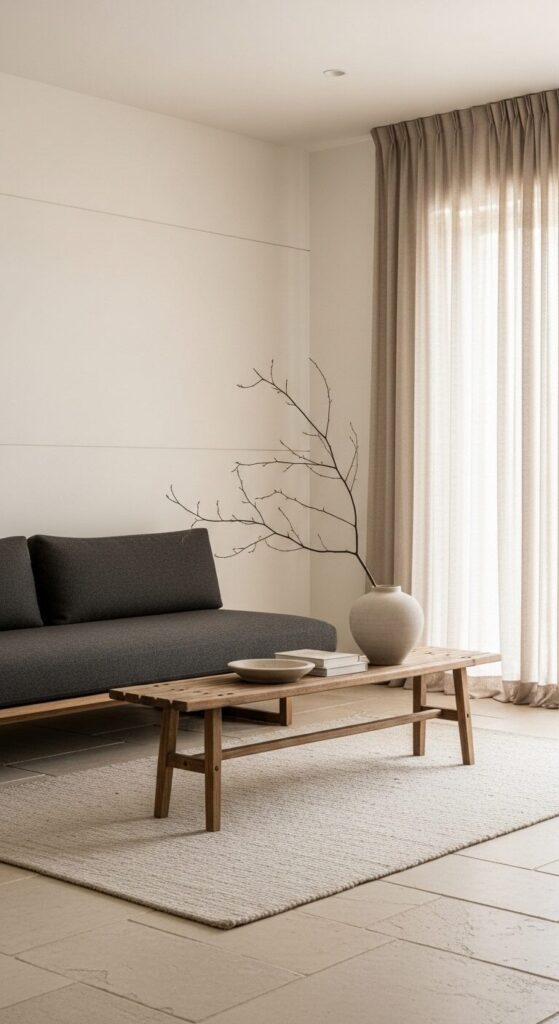
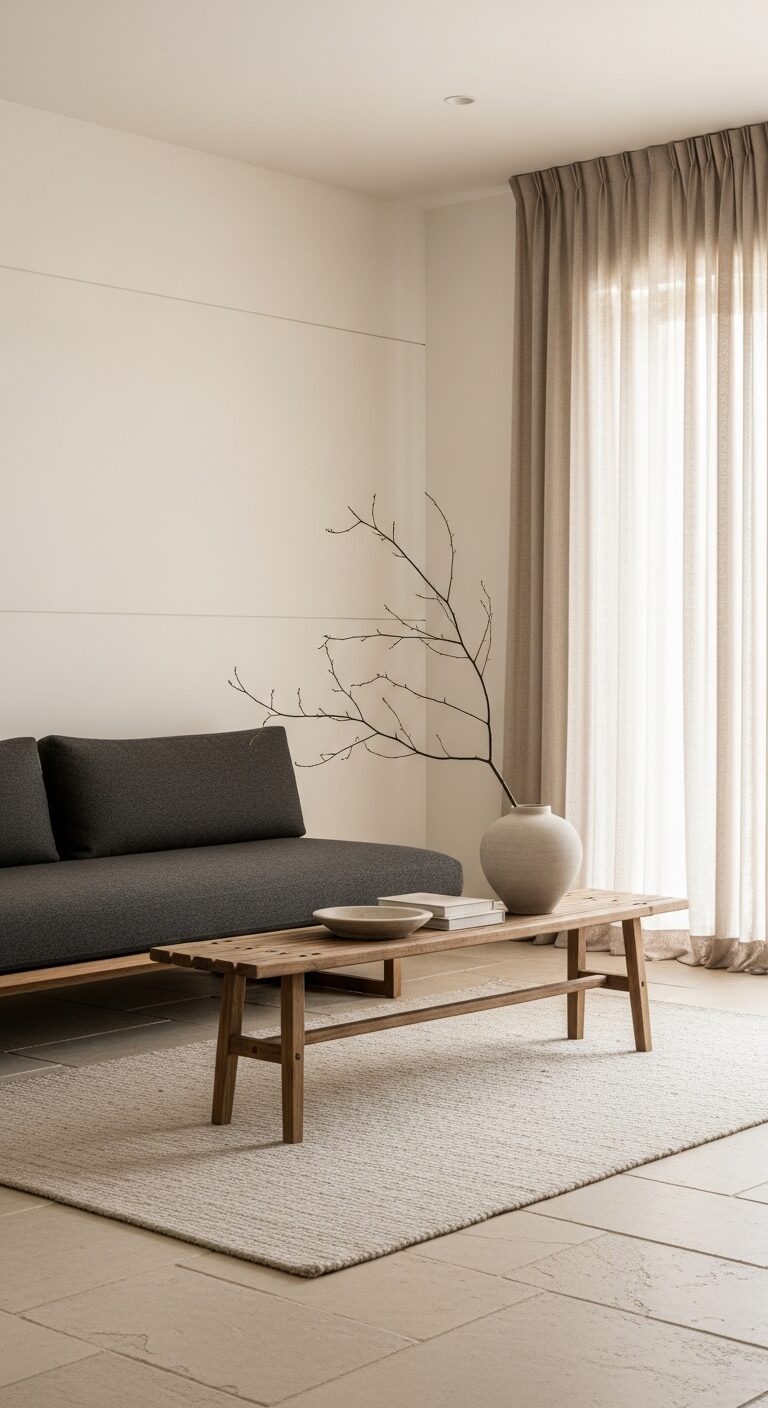
The space breathes with intention—a low charcoal sofa faces a simple wooden bench serving as a coffee table. A single sculptural branch in a ceramic vase provides the only decoration.
Walls in warm white reflect light from sheer linen curtains. The stone-look floor grounds everything while a simple wool rug defines the seating area.
Zen design prioritizes tranquility through radical simplicity. Every element serves a purpose, whether functional or spiritual.
The goal is creating space for the mind to rest, free from visual clutter and distraction. Nature-inspired elements—stone, wood, plants—connect the indoor space to the natural world.
Furniture stays low to the ground, maintaining clean horizontal lines that feel stable and calming. Colors remain muted and nature-inspired—think stone gray, sand, white, and wood tones.
Decorative objects are few but meaningful, chosen for their beauty and the sense of peace they bring.
How to Recreate This Look: Clear everything non-essential from the room and start fresh. Choose low-profile furniture in natural materials with clean, simple lines.
Limit your color palette to neutrals inspired by nature—whites, beiges, grays, and wood tones. Add one or two plants in simple containers and one piece of nature-inspired art or a sculptural branch.
Keep surfaces completely clear except for one meaningful object. Use natural fiber textiles in solid colors and layer in soft, warm lighting that can be dimmed for meditation or relaxation.
14. Romantic Cottage with Floral Accents
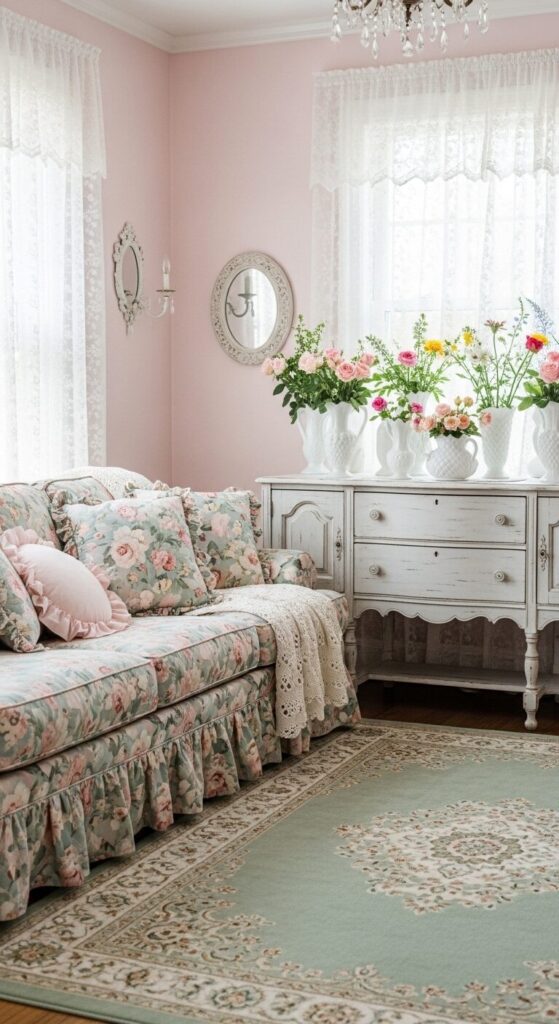
Soft pink walls create a gentle backdrop for a floral-printed sofa piled with ruffled cushions and a crocheted throw.
A vintage whitewashed dresser serves as a TV stand, topped with a collection of milk glass vases holding fresh flowers. Lace curtains filter afternoon light, creating dappled patterns across the sage green area rug.
Cottage style wraps you in softness and nostalgia. It celebrates vintage charm, floral patterns, and the kind of comfortable excess that invites you to curl up with tea and a book.
Mix whites with pastels—blush pink, soft yellow, mint green, lavender—for a dreamy quality.
Layer patterns generously but keep them in the same soft color family. Florals mix with gingham, stripes with toile, creating visual interest without chaos.
Include vintage or vintage-inspired pieces with distressed finishes, curved lines, and delicate details like carved wood or wrought iron.
Bring This Style Home: Paint walls in a soft pastel or keep them white for an airy feel. Choose one floral piece as your statement—either upholstered furniture or curtains.
Mix in complementary patterns through cushions, throws, and smaller textiles, keeping everything in soft, muted tones. Add vintage or shabby chic furniture pieces in white or distressed wood.
Display fresh or dried flowers in vintage containers, and layer in romantic details like lace, ruffles, or crocheted elements. Keep lighting soft and warm with lamp shades in fabric rather than stark overhead lights.
Today’s Inspiration
Your sitting room should tell your story, not follow a rulebook. These fourteen ideas offer starting points, but the magic happens when you trust your instincts and choose what genuinely speaks to you.
Maybe you’ll blend elements from several styles, creating something entirely personal. Perhaps one look captures exactly how you want to feel when you walk through the door.
The beauty of decorating is that nothing is permanent—paint changes, furniture moves, and your taste evolves.
Start with one element that excites you, build around it gradually, and remember that the best sitting rooms aren’t just beautiful—they’re lived in, loved, and uniquely yours. Now go create that space where life’s best moments happen.