
There’s something magical about carving out a little corner just for yourself—a place where the world quiets down and a good book becomes your best companion.
If you’ve been dreaming of a cozy reading nook but think your space is too small, think again. Even the tiniest corner can become a sanctuary with the right touches.
Reading Nook Ideas For Small Spaces
From window seats bathed in natural light to tucked-away alcoves draped in soft textures, these 13 reading nook ideas prove that size doesn’t matter when it comes to creating your perfect escape.
Quick Ideas
- Transform unused corners with floor cushions and floating shelves for an instant cozy retreat
- Window seats with built-in storage maximize small spaces while adding charm
- Hanging chairs and wall-mounted reading lights free up valuable floor space
- Layered textiles like chunky knit throws and velvet pillows create warmth without bulk
- Under-stair nooks and closet conversions turn forgotten spaces into literary havens
- Neutral color palettes with one accent color keep small nooks feeling open and inviting
- Portable reading carts bring flexibility to multi-purpose rooms
1. The Window Seat Wonderland
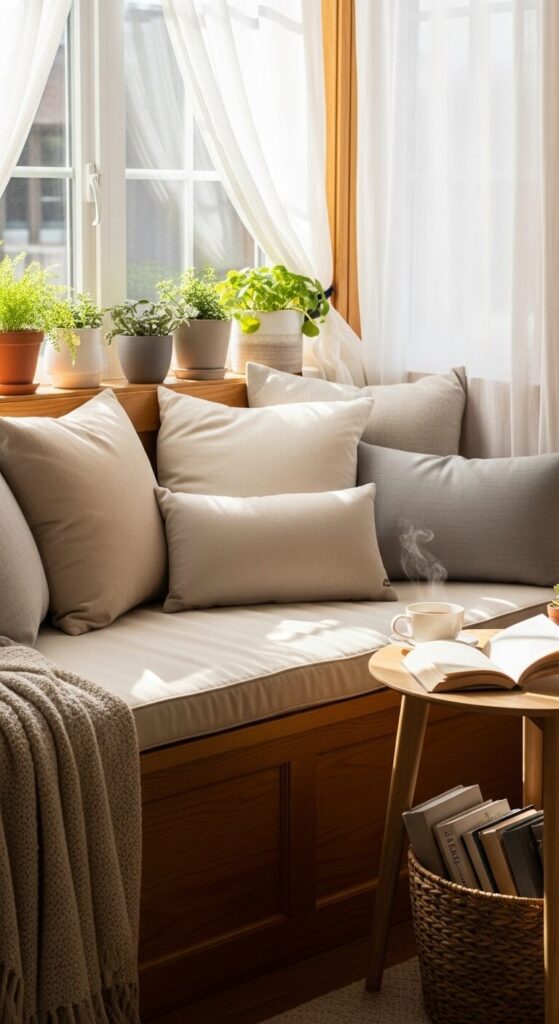
Picture a sun-drenched window with a cushioned bench that beckons you to sink in with your favorite novel. Soft cream cushions meet warm honey-toned wood, while sheer white curtains filter the afternoon light into a gentle glow.
A small side table holds a steaming cup of tea, and a woven basket tucked underneath keeps your current reads within arm’s reach.
This classic setup works beautifully in small spaces because it uses vertical space and natural architecture. Add a custom cushion or even a standard bench cushion cut to size, then pile on throw pillows in varying textures.
The key is making it so comfortable you never want to leave—think plush, sink-in softness with lower back support.
Get the Look: Measure your window seat depth and add a 4-inch foam cushion topped with a washable cover.
Install simple floating shelves on either side for books and a small plant. Keep the color palette light and airy with whites, creams, and one accent color in your pillows.
2. The Cozy Corner Cocoon
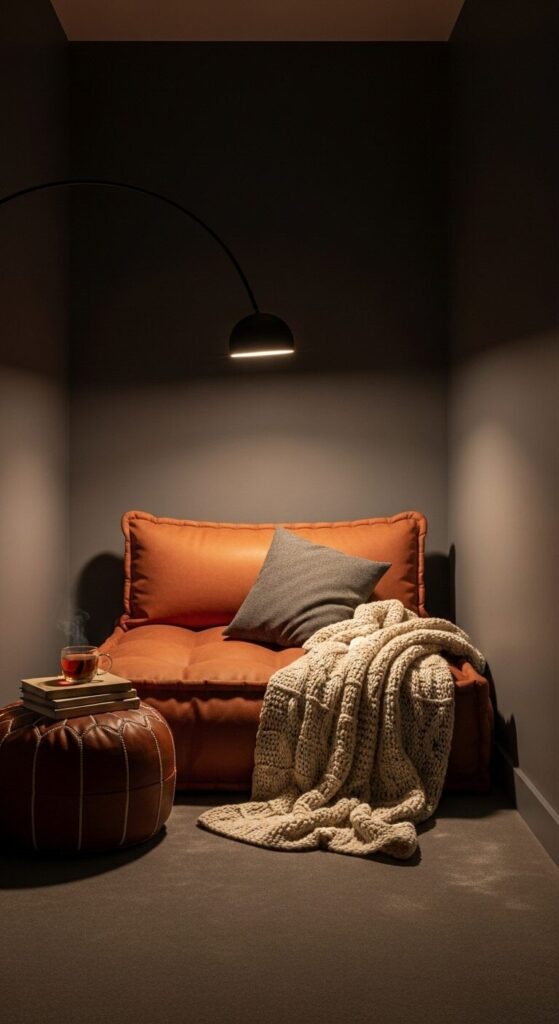
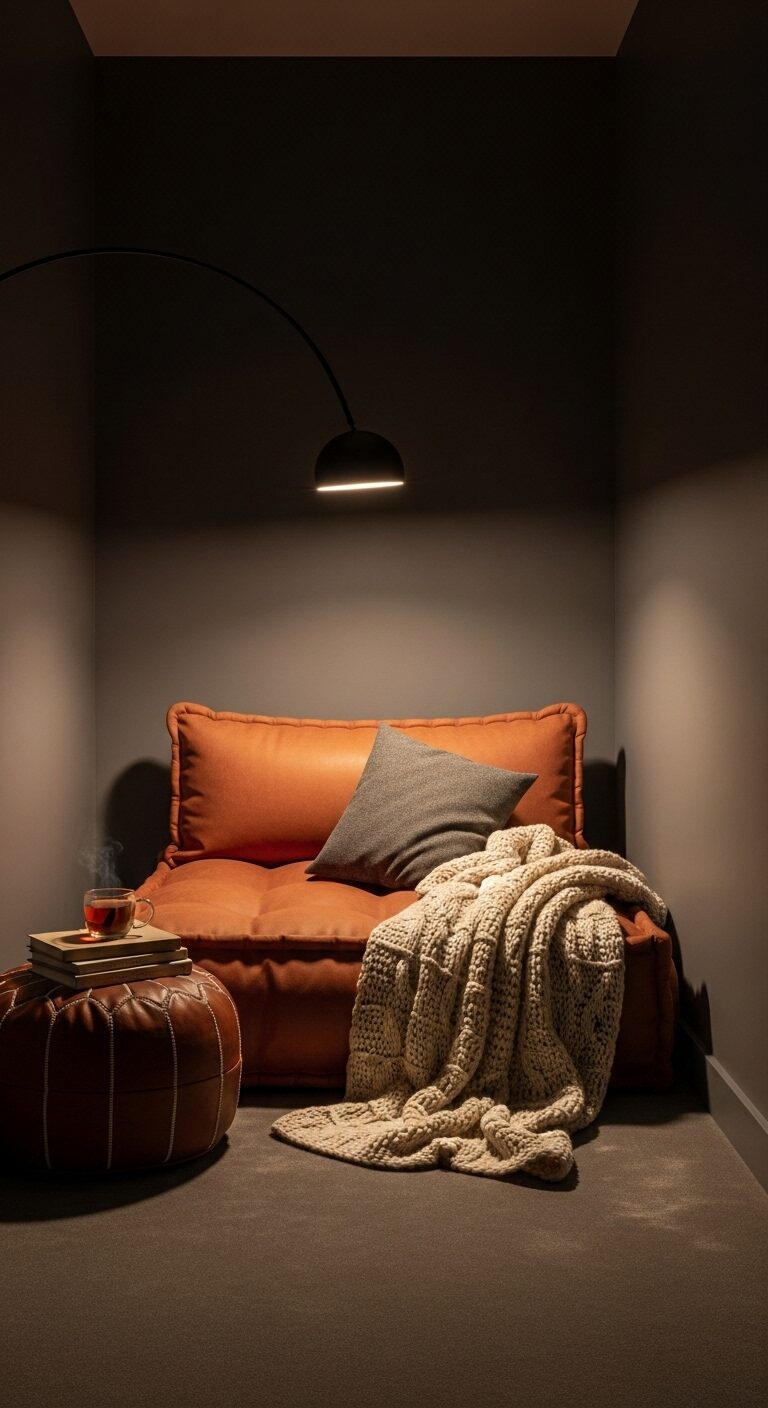
Imagine a forgotten corner transformed into a nest of comfort—deep charcoal walls create intimacy, while a oversized floor cushion in warm terracotta invites you to settle in.
A sleek arc floor lamp curves overhead, casting a warm pool of light perfect for late-night reading. Layered textures from a chunky knit throw to a smooth leather pouf create visual and tactile interest.
Dark colors in small spaces might seem counterintuitive, but they actually create depth and coziness when done right.
The trick is balancing the darkness with warm lighting and plenty of soft textures. This approach works especially well in awkward corners that don’t get much natural light anyway.
Style Tip: Paint just the corner walls in a rich, deep color while keeping adjacent walls neutral. Add a dimmer switch to your reading light so you can adjust the mood.
Layer at least three different textures—think wool, linen, and velvet—to create that cozy cocoon feeling without cluttering the space.
How to Choose the Right Spot
Start by observing your space at different times of day. The best reading nooks have good natural light during the day and can be well-lit at night.
Look for underutilized corners near windows, awkward spaces under stairs, or even wide hallways that could accommodate a small chair.
Consider proximity to electrical outlets for lighting and check that there’s enough room to stretch your legs comfortably.
The perfect spot should feel naturally separated from the main flow of the room, creating that sense of retreat you’re after.
3. The Minimalist Alcove
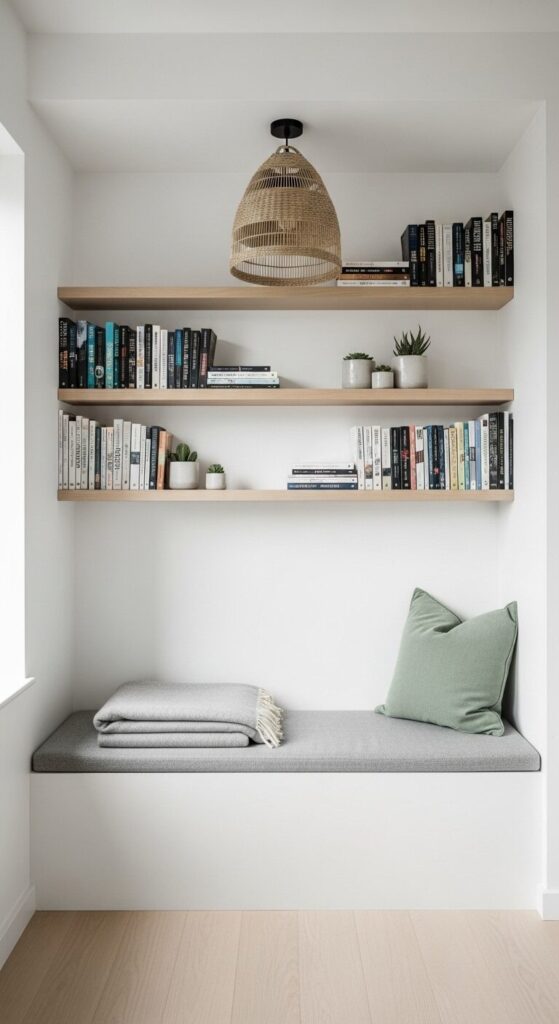
Clean lines define this serene retreat—a simple white built-in bench meets pale oak shelving, creating a study in understated elegance.
The space breathes with its neutral palette of whites, soft grays, and natural wood tones. A single pendant light with a woven shade drops from above, and one perfectly placed throw pillow in sage green is all the decoration needed.
This Scandinavian-inspired approach is perfect for small spaces because it avoids visual clutter while still feeling warm and inviting.
The built-in elements maximize every inch without making the space feel cramped. It’s proof that sometimes less really is more when you focus on quality over quantity.
How to Recreate This Look: Keep your color palette to three tones maximum—typically white, wood, and one soft accent color.
Install simple floating shelves for storage instead of bulky bookcases. Choose one statement light fixture and one or two high-quality textiles rather than lots of small accessories.
4. The Bohemian Hideaway
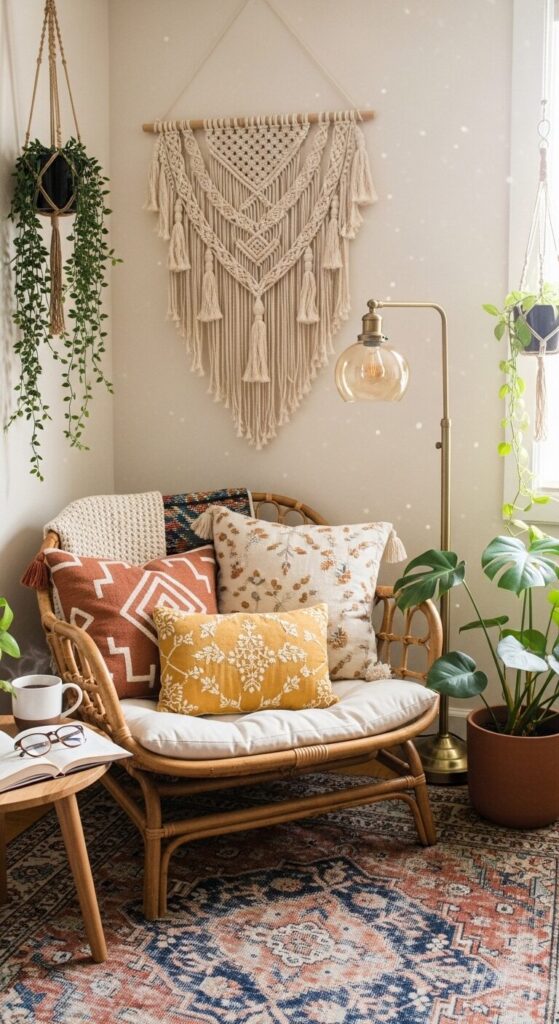
Rich patterns and global textures come together in this eclectic corner—a low-slung rattan chair sits on a vintage Persian rug in warm rust and navy tones.
Macramé wall hangings add vertical interest, while an assortment of patterned pillows in terracotta, mustard, and cream create inviting layers. A brass floor lamp with an amber glass shade casts a warm, golden glow.
The bohemian style embraces maximalism in a way that feels collected rather than cluttered.
In a small space, this means being intentional about your mix—choose patterns that share a color family and vary the scale from large to small. The result feels personal and traveled without overwhelming the eye.
Bring This Style Home: Start with a statement rug that anchors your color scheme. Add your seating next, then build layers with 3-4 throw pillows in complementary patterns.
Include at least one handmade element like macramé or a woven basket to add that bohemian soul. Keep the walls relatively simple to let your textiles shine.
5. The Under-Stair Sanctuary
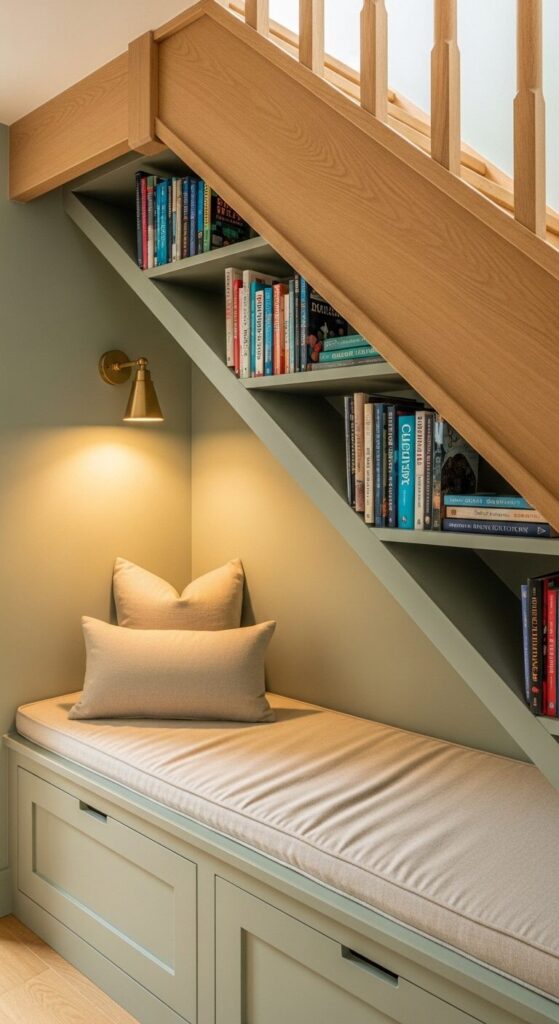
That awkward space under your stairs holds surprising potential—painted in a soothing sage green, the sloped ceiling creates natural coziness.
A built-in bench with hidden storage runs along the back wall, topped with a cream linen cushion. Open shelving fits perfectly into the angled space above, displaying books and a few cherished objects. A small wall-mounted reading light keeps the floor clear.
Under-stair nooks are often overlooked goldmines in small homes. The low ceiling height that makes them impractical for other uses actually creates the intimate, enclosed feeling perfect for reading. The key is working with the angles rather than fighting them.
Make It Yours: Paint the interior of the nook one shade darker than your main room to create definition. Add a hinged bench seat for hidden storage of extra blankets and books.
Install battery-operated puck lights or a hardwired sconce to avoid floor lamp clutter. Use the varying ceiling heights to your advantage with graduated shelving.
6. The Hanging Chair Haven
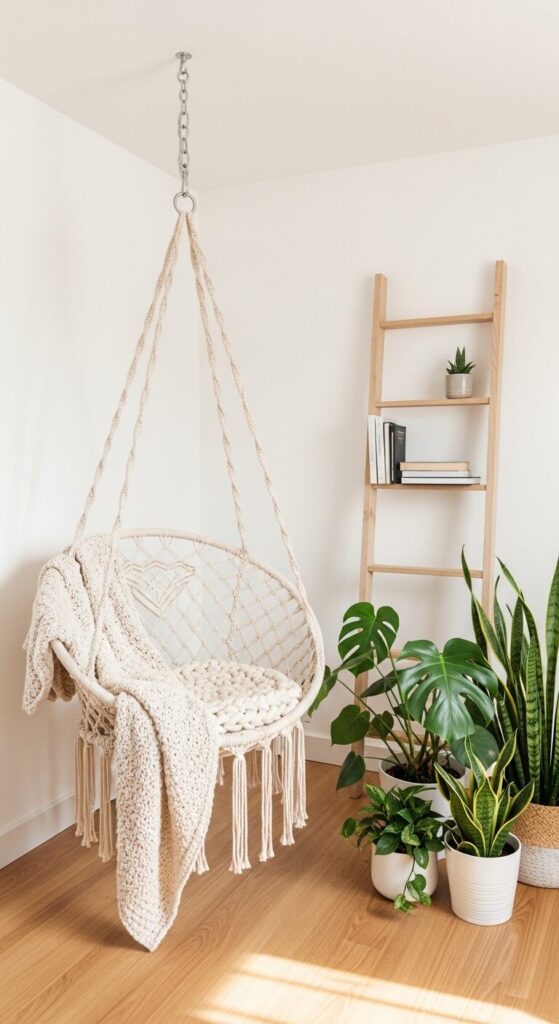
A cream macramé hanging chair becomes the focal point in this airy corner—suspended from a ceiling beam, it sways gently and invites you to curl up with a book.
The space stays light and bright with white walls and natural wood accents. A small wooden ladder serves as a creative bookshelf, while potted plants add life without taking up floor space.
Hanging chairs are brilliant space-savers because they eliminate the need for traditional seating footprints.
They add a playful, unexpected element to any room while keeping the floor open and uncluttered. The gentle rocking motion is surprisingly soothing for reading.
Try This at Home: Ensure your ceiling can support the weight—you’ll need a ceiling joist or beam for proper installation. Choose a hanging chair with a spreader bar for stability and add plenty of cushions for comfort.
Keep the surrounding area minimal to let the chair be the star. Position it near a window for natural reading light during the day.
7. The Closet Conversion
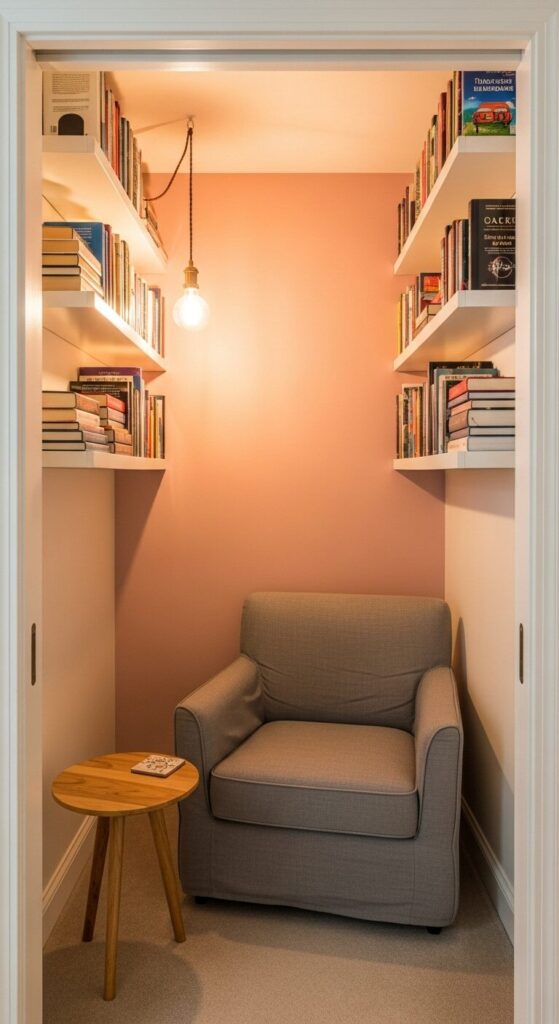
A former coat closet reveals its new identity—the doors removed, the interior painted a warm, welcoming cream with the back wall in soft blush.
A small upholstered chair in gray linen fits snugly inside, while floating shelves line both side walls. A vintage-style Edison bulb pendant hangs from the center, creating intimate lighting. The transformation turns unused storage into the coziest hideaway.
Closet conversions are the ultimate small-space solution because they use existing architecture. You’re not taking space from any room—you’re reimagining space that wasn’t being fully utilized.
The defined boundaries create that sense of enclosure that makes reading nooks so appealing.
Design It Yourself: Remove closet doors and any existing rods or shelves. Paint the interior in light, warm tones to avoid a cave-like feeling.
Ensure adequate lighting since natural light is limited—consider both overhead and task lighting. Add ventilation if the closet feels stuffy, even just a small fan. Measure carefully before buying furniture to ensure everything fits comfortably.
8. The Daybed Dream
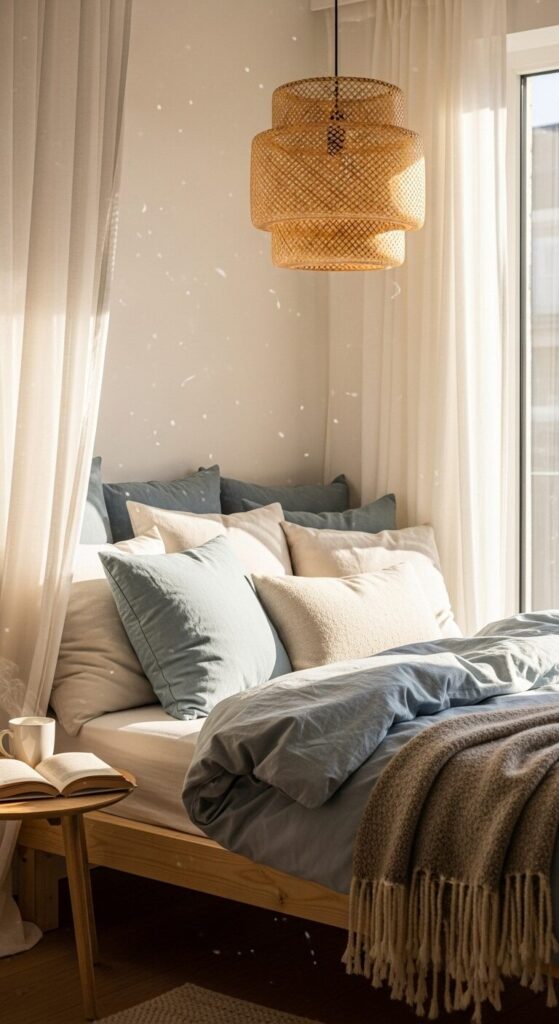
A simple daybed against the wall serves double duty—piled with an assortment of pillows in soft blues and creams, it’s a reading paradise by day and guest bed by night.
A woven pendant light hangs nearby, and a small round side table holds the evening’s entertainment. Sheer curtains on either side create the illusion of a four-poster bed without the bulk.
Daybeds are multitasking champions in small homes. They provide comfortable seating with back support during the day while offering sleeping space when needed.
The key to making them feel like reading nooks rather than just beds is in the styling—lots of pillows, a dedicated side table, and proper lighting.
Put the Look Together: Choose a simple frame in wood or metal to keep things light. Invest in a quality mattress since you’ll spend hours sitting and possibly sleeping on it.
Create a “back” with large Euro pillows against the wall, then layer smaller accent pillows in front. Add a throw blanket at the foot for texture.
Position the daybed perpendicular to a window if possible for natural reading light.
9. The Bay Window Retreat
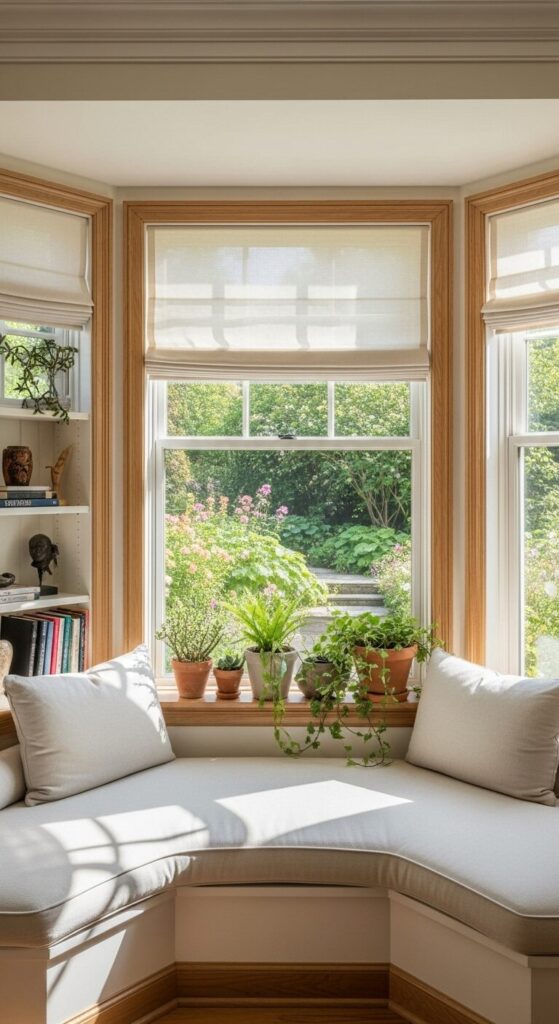
The architectural gift of a bay window becomes a reader’s paradise—custom cushions in soft linen follow the curved window line, creating a wraparound seating area.
Cream walls and natural wood trim keep the focus on the garden view beyond. Built-in bookcases on either side hold treasured volumes, while sheer Roman shades filter harsh afternoon sun. Fresh greenery on the windowsill brings the outside in.
Bay windows are inherently cozy spaces that often go underutilized. The three-dimensional aspect creates natural separation from the rest of the room, and the abundant natural light makes them ideal for reading.
The curved architecture adds visual interest without any effort on your part.
Create the Look: Have cushions custom-made to fit your bay window’s exact dimensions, or use standard bench cushions strategically placed. Add lumbar support pillows for comfortable long reading sessions.
Consider adding a pull-out ottoman stored underneath for stretching out. Install adjustable window treatments so you can control light levels throughout the day.
10. The Industrial Chic Corner
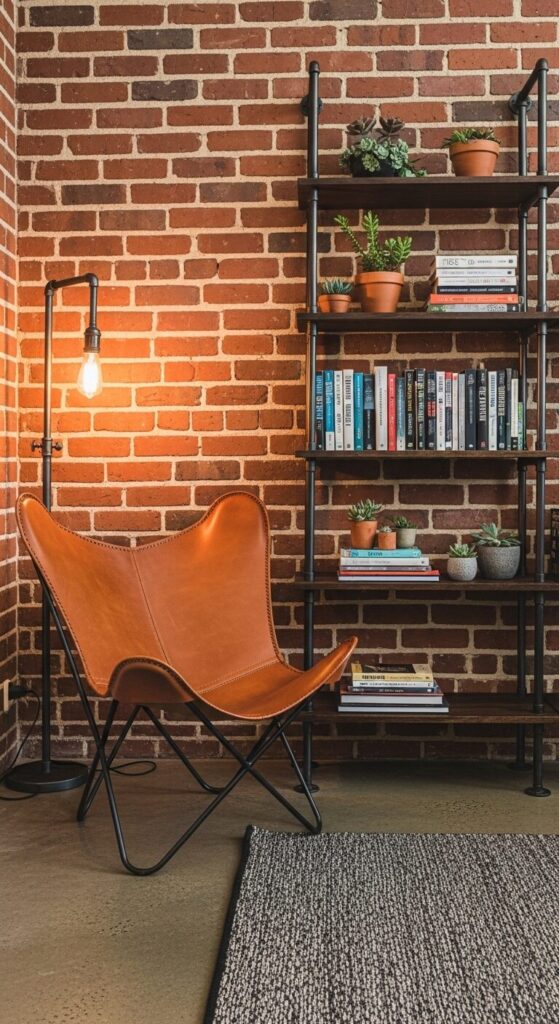
Raw materials meet soft comfort in this urban-inspired nook—exposed brick walls provide texture and warmth, while a leather butterfly chair in cognac becomes the perfect perch.
A black metal pipe shelf unit holds books and a small succulent collection. An Edison bulb floor lamp with black hardware adds task lighting with style. The mix of hard and soft elements creates compelling contrast.
Industrial style proves that small reading nooks don’t have to be traditionally pretty to be inviting. The key is balancing the harder masculine elements with enough softness to make the space comfortable.
This style works especially well in lofts, apartments with original architectural details, or newer spaces where you want to add character.
How to Style This Scene: Let existing architectural elements like brick or concrete shine—don’t cover them up. Choose leather or canvas seating that ages beautifully and adds warmth.
Keep metals consistent, usually black or aged brass. Add softness through one great throw blanket and perhaps a sheepskin or textured rug. Include living plants to prevent the space from feeling too austere.
Lighting Tips for the Perfect Glow
Reading nook lighting requires layering for versatility. Natural light is ideal for daytime reading, so position your nook near windows when possible.
Add adjustable task lighting—swing-arm wall lamps or floor lamps with adjustable heads—positioned over your shoulder to avoid glare.
Include ambient lighting like string lights or a soft overhead fixture for evening coziness when you’re not actively reading.
Consider the color temperature: warm white bulbs (2700-3000K) create cozy atmosphere, while daylight bulbs (5000-6500K) are better for reading clarity.
Dimmer switches let you adjust mood and brightness. Avoid harsh overhead lighting directly above—it creates unflattering shadows and eye strain.
11. The Vintage Reading Corner
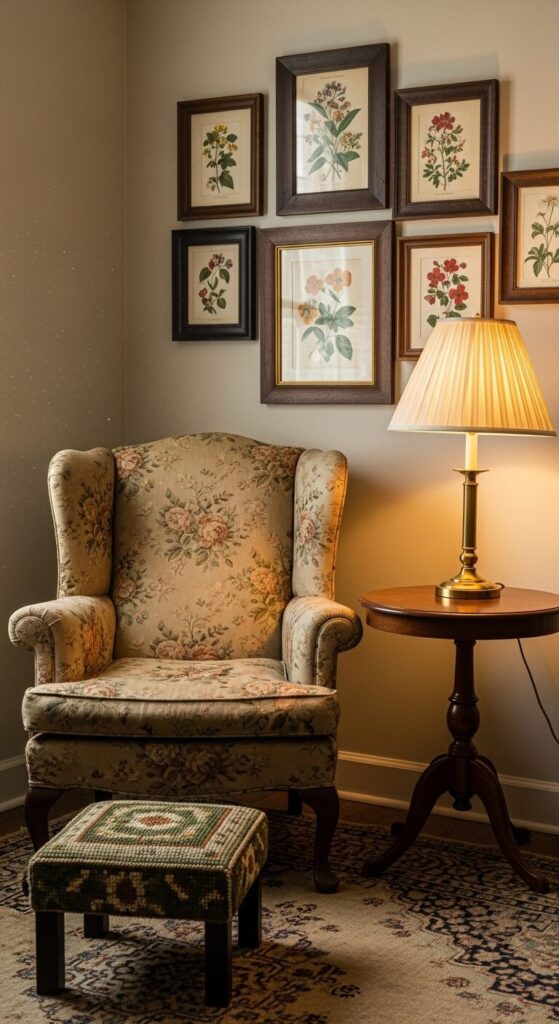
Nostalgia wraps around you in this charming setup—a wingback chair in faded floral upholstery anchors the corner, its curved arms perfect for tucking in with a novel.
A small round table with curved legs holds a brass lamp with a pleated fabric shade. Vintage botanical prints in mismatched frames create a gallery wall, while a needlepoint footstool adds color and comfort.
The overall effect feels collected and loved rather than decorated. Vintage style brings personality and soul to small spaces without requiring new purchases.
The beauty of this approach is that imperfections add character—that worn spot on the chair arm, the slightly tarnished lamp base. Each piece tells a story and makes your reading nook truly one-of-a-kind.
Recreate the Vibe: Shop estate sales, antique stores, and online marketplaces for furniture with good bones that might need reupholstering. Mix eras and styles as long as they share a general warmth and lived-in quality.
Display vintage books with beautiful covers as decoration. Add one or two new pieces in classic styles that will blend seamlessly with your vintage finds. Don’t worry about everything matching perfectly—the eclectic mix is part of the charm.
12. The Modern Minimalist Nook
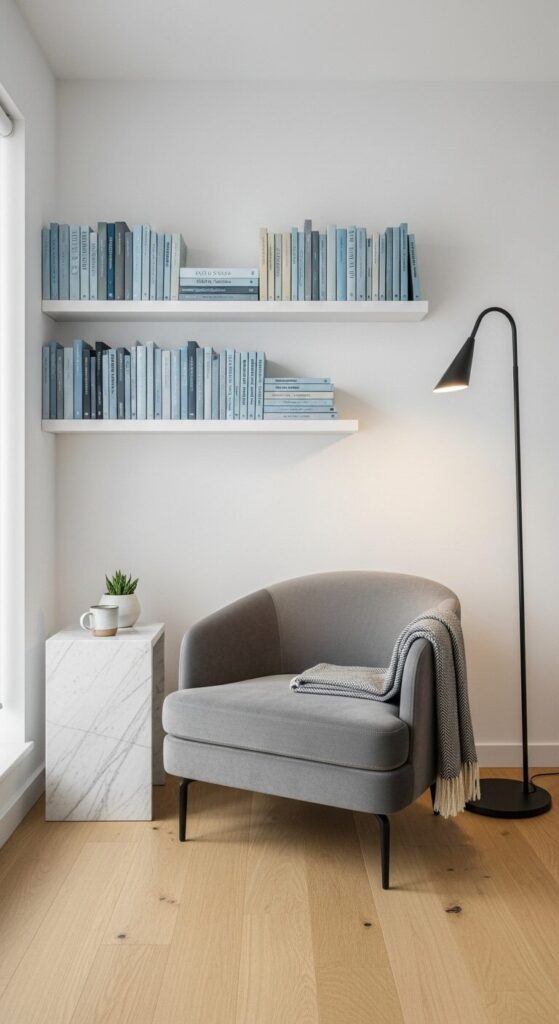
Sleek simplicity defines this contemporary corner—a low-profile gray velvet chair with clean lines pairs with a slim marble side table.
The wall behind features a simple floating shelf holding a carefully curated selection of books with spines in coordinating colors.
A sculptural floor lamp in matte black provides focused light. The palette stays strictly neutral with whites, grays, and black, letting form and texture create interest.
Modern minimalism works beautifully in small spaces because it eliminates visual noise. Every piece serves a purpose, and the lack of clutter makes the area feel larger than it is.
This style requires restraint but rewards you with a serene, sophisticated space that won’t feel dated in five years.
How to Achieve This Look: Edit ruthlessly—remove anything that doesn’t serve a clear purpose. Choose furniture with clean lines and neutral upholstery. Display books color-coordinated or with spines facing in for a uniform look.
Invest in quality over quantity with each piece. Keep surfaces mostly clear with just one or two sculptural objects. Use texture rather than color for visual interest—think smooth marble, soft velvet, matte metal.
13. The Platform Bed Nook
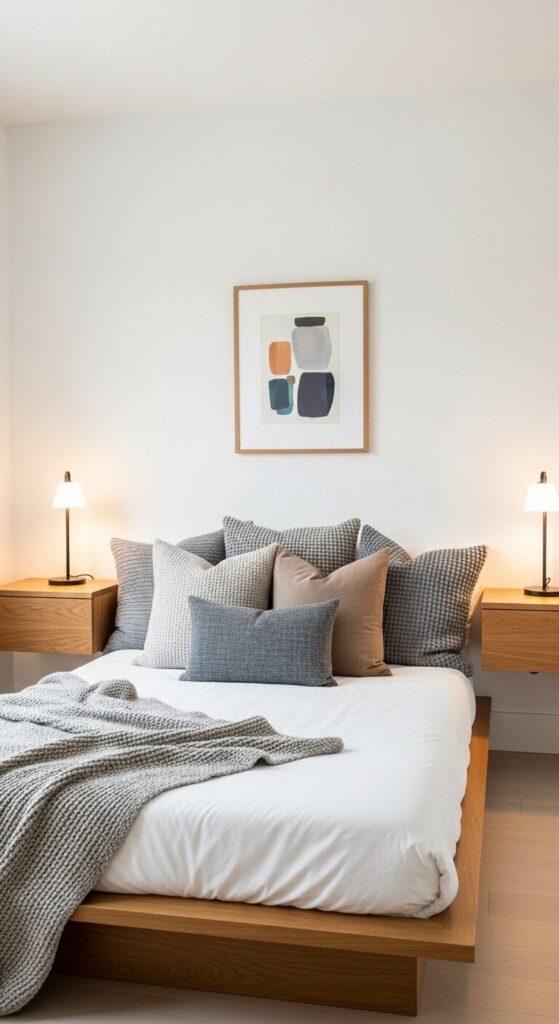
Elevated comfort takes on new meaning with a low platform bed frame tucked against the wall, transforming into a daybed-style reading area.
Crisp white bedding creates a clean backdrop for an array of textured pillows in warm grays and taupes.
Floating nightstands on either side hold reading lamps and current books, while artwork above adds a focal point. The slightly raised platform creates definition without walls.
Platform beds in reading nooks offer generous space for spreading out with books, laptops, and snacks while maintaining a cleaner look than traditional bed frames.
The low profile keeps sightlines open in small spaces, and the lack of a box spring means you can squeeze into spots with lower ceilings or under windows.
How to Recreate This Look: Choose a simple platform frame without a headboard to maximize placement flexibility. Keep bedding simple and monochromatic to emphasize the reading nook purpose rather than bedroom feel.
Add a lumbar pillow or backrest cushion if placing against a wall. Use wall-mounted lighting and floating shelves to avoid bulky furniture. Consider placing the platform perpendicular to a wall to create more of a sofa effect during the day.
Today’s Inspiration
Creating a reading nook in a small space isn’t about having the perfect amount of square footage—it’s about claiming a corner, however tiny, and making it yours.
Whether you’re drawn to moody corners wrapped in dark colors, sun-filled window seats, or converted closets that hide in plain sight, there’s a style that will work for your space and your soul.
The magic happens when you combine comfort with intentionality, choosing each element because it serves you and brings you joy.
So grab that forgotten corner, that awkward alcove, or that underused closet, and transform it into the cozy retreat you deserve. Your next great read is waiting, and now it has the perfect place to happen.