
Your entryway is the first thing you see when you walk through the door, and let’s be honest—a pile of shoes scattered across the floor isn’t exactly the welcome home vibe we’re going for.
Whether you’re working with a spacious foyer or a tiny apartment landing, the right shoe storage can completely transform your space from chaotic to curated.
These 17 ideas blend style and function beautifully, proving that organizing your footwear doesn’t mean sacrificing aesthetics.
Entryway Shoe Storage Ideas
From floating shelves to hidden cabinets, vintage benches to modern cubbies, there’s a solution here for every style and square footage.
Quick Ideas
- Floating shelves create airy, minimalist shoe displays perfect for small spaces
- Bench storage combines seating with hidden compartments for a dual-purpose solution
- Vintage lockers or cubbies add character while keeping shoes organized by family member
- Under-stair solutions maximize forgotten spaces with custom shelving or pull-out drawers
- Woven baskets and natural textures bring warmth while concealing everyday footwear
- Slim console cabinets offer streamlined storage that doesn’t overwhelm narrow entryways
- Open ladder shelves display favorite shoes like decorative objects in a casual, accessible way
1. Floating Wooden Shelves with Minimalist Appeal
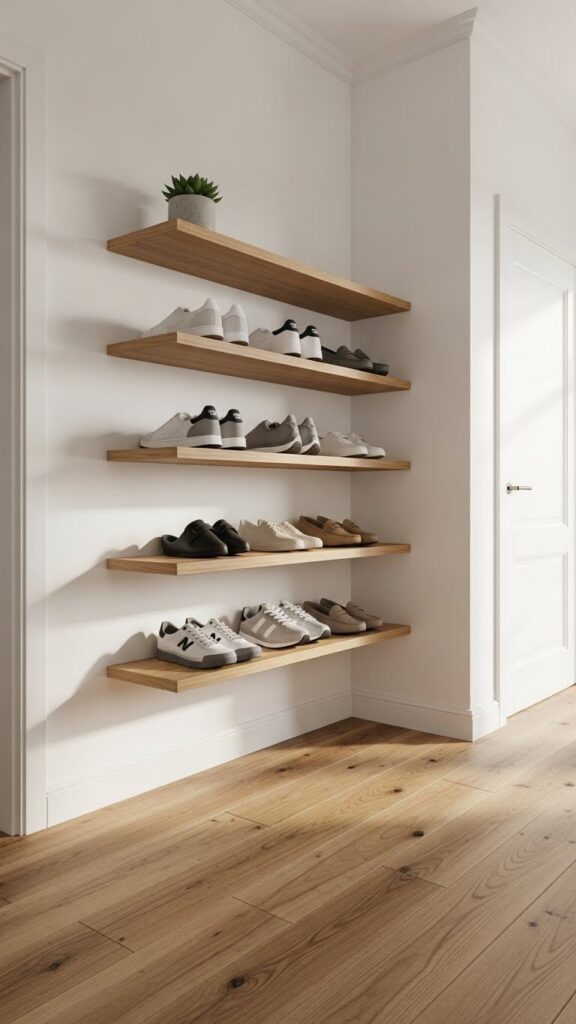
Picture a wall of light wood floating shelves, each one showcasing your favorite pairs like a curated shoe boutique. The natural grain catches the light, and the open design keeps everything feeling breathable and modern.
This approach works beautifully in smaller entryways where bulky furniture would overwhelm the space. Mount shelves at varying heights to accommodate different shoe styles, from flats to boots.
Install shelves 8-10 inches apart to give each pair room to breathe. Leave the bottom shelf slightly higher off the ground to slip a slim basket underneath for slippers or flip-flops.
Keep your display edited—treat these shelves like a boutique, not a warehouse. Rotate shoes seasonally and limit what you show to your most-worn or visually appealing pairs.
Style Tip: Add a small potted plant or a decorative object between shoe pairs to break up the visual rhythm and make the display feel intentional rather than purely functional.
2. Built-In Bench with Hidden Cubbies
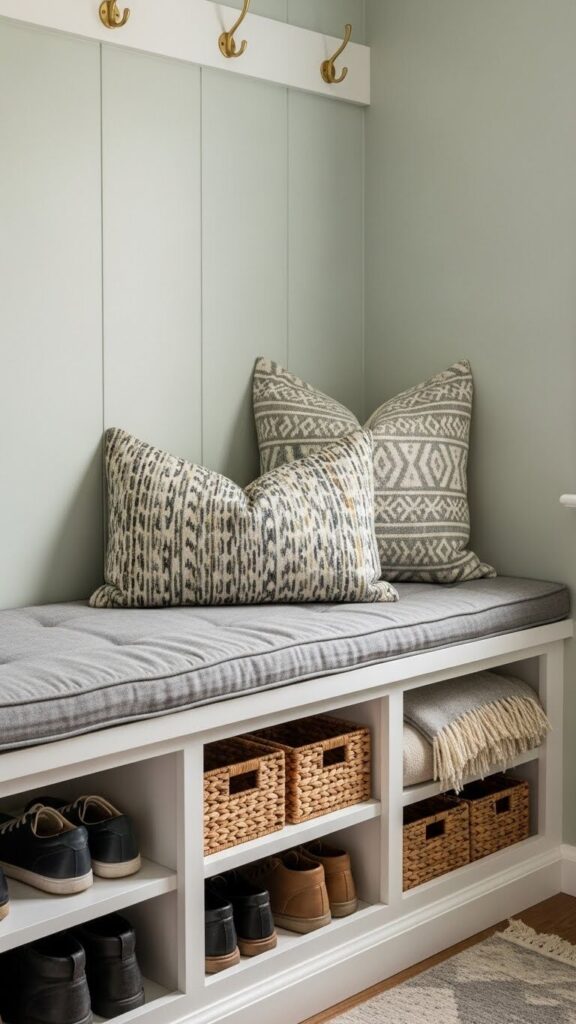
Imagine a custom bench that hugs your wall, with plush cushioning on top and perfectly sized cubbies peeking out below. The seat invites you to pause while you tie your shoes, and everything has its designated spot.
This setup is ideal for families who need storage that can handle daily traffic. Each family member can claim a cubby, keeping shoes from mixing into a jumbled heap.
Cushion the bench seat with a washable linen or cotton cover in a neutral tone that complements your entryway palette. Add throw pillows for comfort and visual warmth.
Choose cubbies sized specifically for adult shoes (roughly 12 inches wide). If you have kids, dedicate lower cubbies to their smaller footwear for easy access.
How to Achieve This Look: Paint or stain your bench to match existing trim work. Line cubbies with removable fabric bins for shoes you’d rather keep concealed, mixing open and closed storage for visual interest.
3. Vintage Locker-Style Shoe Cabinet
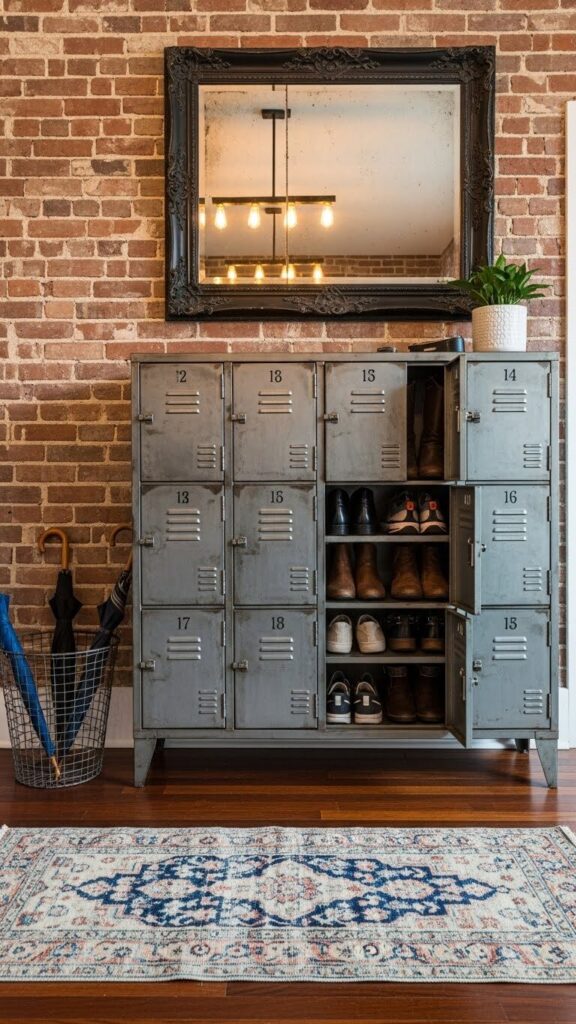
There’s something wonderfully nostalgic about old school lockers repurposed as shoe storage. The metal patina, the numbered doors, the satisfying click when they close—it all adds instant character.
These cabinets work especially well in industrial or eclectic spaces where a bit of edge feels right at home. Look for authentic vintage pieces at flea markets or opt for new versions with distressed finishes.
Each locker compartment can hold two to three pairs of shoes, making this solution surprisingly spacious. The closed doors keep dust away and clutter out of sight.
Label the compartments with family members’ names or assign them by shoe type. The vertical design maximizes floor space, perfect for narrow entryways.
Recreate the Vibe: If you can’t find vintage lockers, search for modern interpretations at home stores. Age new metal with sandpaper and diluted vinegar for an authentic worn look.
4. Under-Stair Pull-Out Drawers
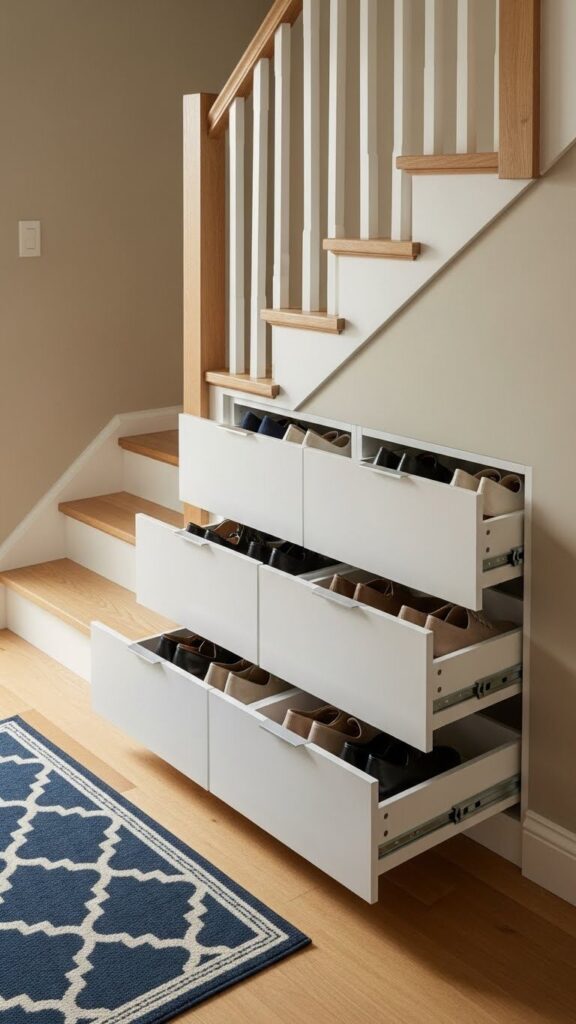
The space beneath your stairs is often wasted, but it’s actually prime real estate for shoe storage. Custom pull-out drawers tucked into each step create a surprisingly spacious solution that completely disappears from view.
This design requires some carpentry skills or a professional installer, but the payoff is worth it. You’ll reclaim precious floor space while keeping shoes accessible and organized.
Soft-close drawer glides are essential here to prevent slamming and ensure smooth operation. Add dividers inside each drawer to keep pairs from shifting around.
Consider transparent drawer fronts or label each one so you can quickly spot what you need without playing a guessing game every morning.
Design It Yourself: Work with a carpenter to measure your stair dimensions precisely. Each drawer should pull out fully for easy access, and the depths can vary based on your shoe collection’s needs.
5. Woven Basket Wall Display
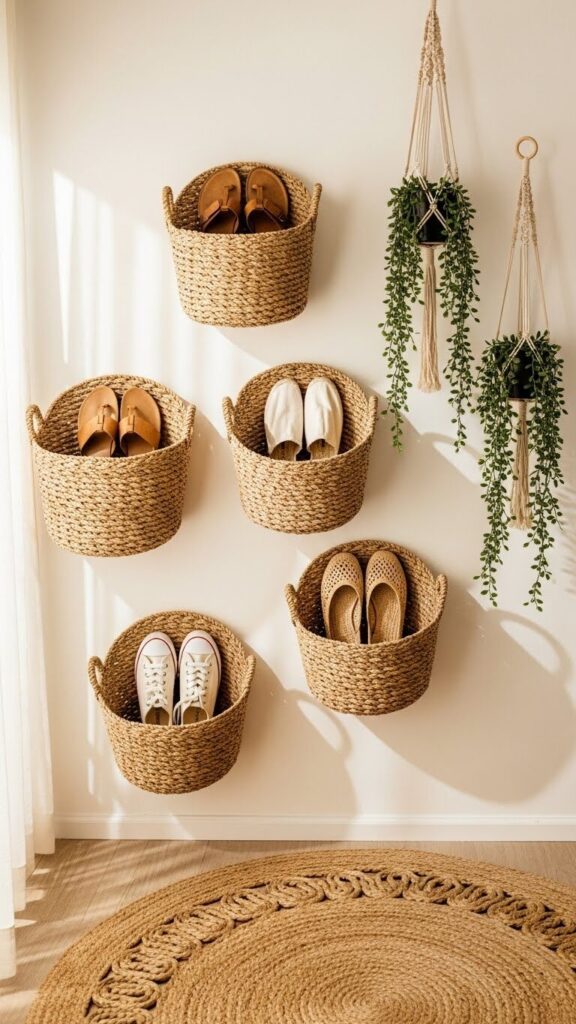
Imagine a collection of natural woven baskets mounted on your wall, each one cradling shoes in organic, textured style. The neutral tones and handcrafted feel bring instant warmth to any entryway.
This approach is perfect for relaxed, coastal, or bohemian interiors where natural materials reign. Baskets soften the look of shoe storage, making it feel less utilitarian.
Mount sturdy wall brackets to support the weight of filled baskets. Choose varying sizes to accommodate different shoe heights, from sandals to ankle boots.
The open weave allows air circulation, keeping shoes fresh. Plus, baskets are incredibly forgiving—they look good even when slightly overstuffed.
Bring This Style Home: Shop for fair-trade seagrass or water hyacinth baskets in different shapes. Mount them securely with hidden brackets, and embrace the slightly imperfect, handmade quality that makes each one unique.
6. Sleek Console Cabinet with Tilt-Out Bins
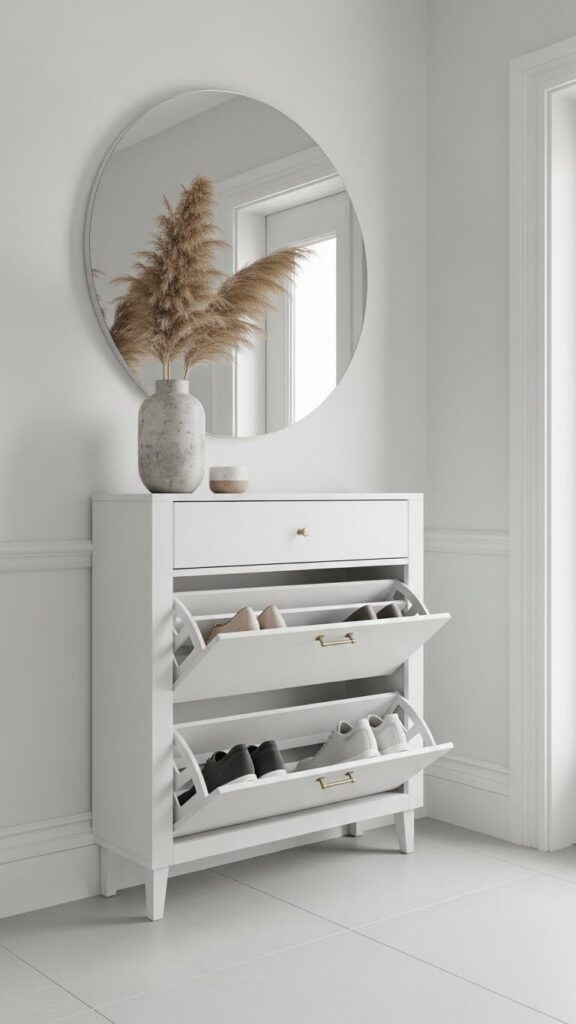
A narrow console that looks like elegant furniture but secretly houses your entire shoe collection—that’s the magic of tilt-out shoe cabinets. The facade remains sleek and uncluttered while shoes hide neatly behind.
These cabinets typically measure only 8-10 inches deep, making them ideal for tight entryways where every inch counts. The tilt-out mechanism makes accessing shoes effortless.
Choose a cabinet height that allows you to use the top surface for everyday essentials like keys, sunglasses, or a catch-all dish.
The enclosed design keeps shoes dust-free and out of sight, perfect for open-concept homes where the entryway flows into living spaces.
Get the Look: Measure your entryway width carefully before purchasing. Look for cabinets with multiple compartments so you can organize shoes by season, type, or family member for easier retrieval.
7. Open Cubby Unit in Painted Wood
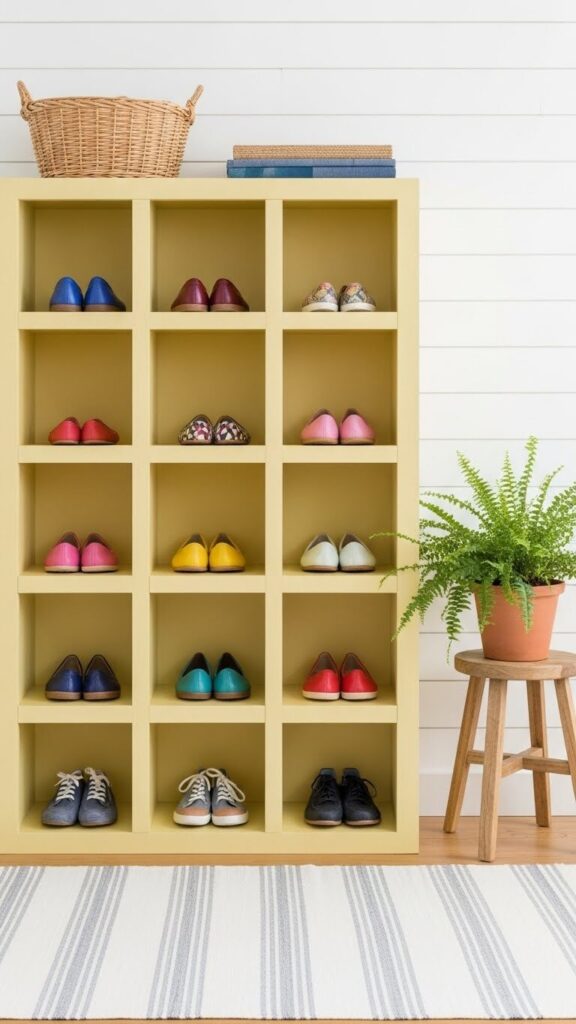
Picture a cheerful grid of open cubbies, each square perfectly sized for one pair of shoes. Painted in a soft, happy hue, it turns shoe storage into a focal point rather than something to hide.
This style works wonderfully in mudrooms or family entryways where accessibility trumps concealment. Kids can easily grab their own shoes, fostering independence.
Paint the interior backs of cubbies in contrasting colors for added visual interest, or line them with patterned contact paper for a playful touch.
The open design encourages you to keep shoes neat since everything is visible. It’s surprisingly effective motivation for maintaining order.
Make It Yours: Build your own using simple plywood and 1×4 boards, or purchase ready-made units. Customize the number of cubbies based on your household size, ensuring everyone has dedicated space.
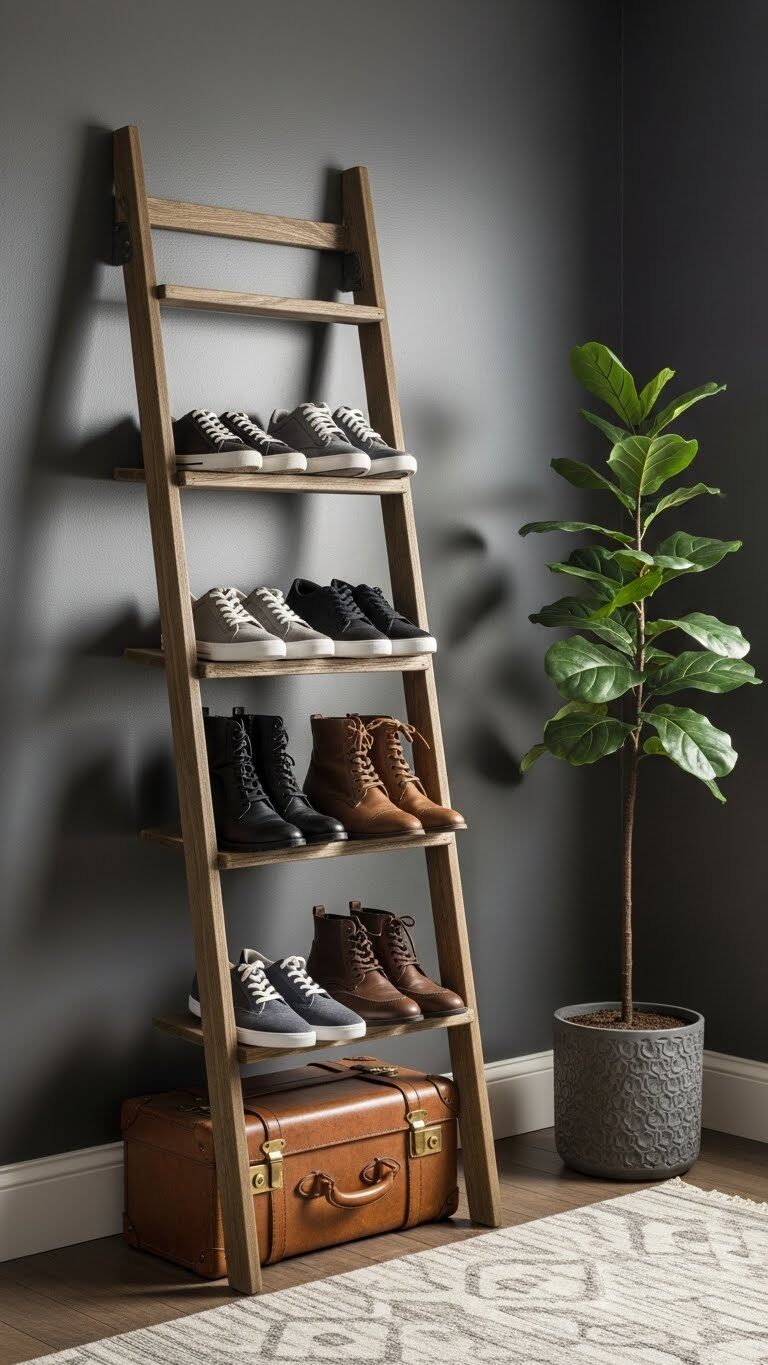
8. Ladder Shelf Leaning Against the Wall
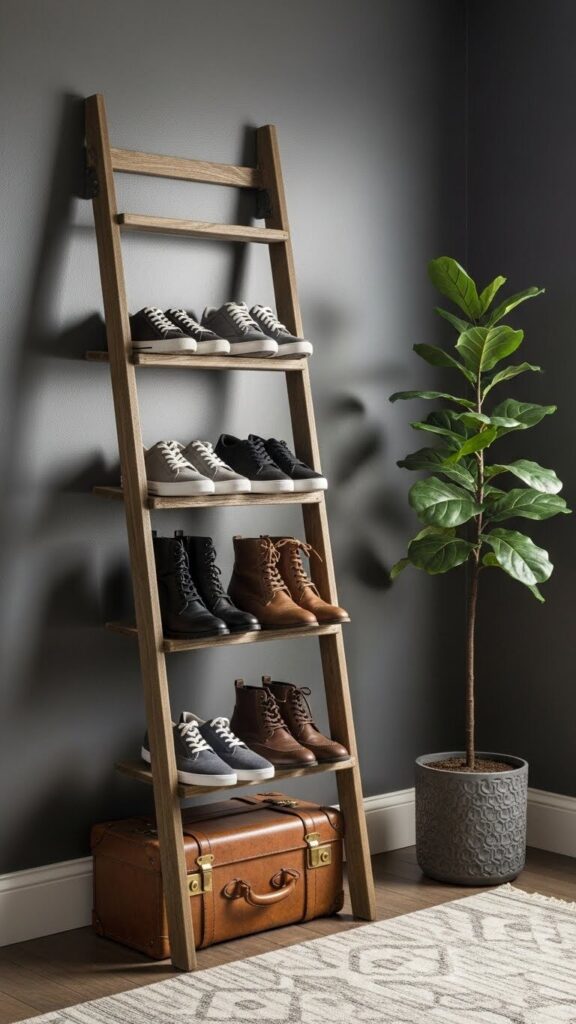
A wooden ladder shelf leans effortlessly against your wall, its rungs transformed into casual shoe display shelves. It’s functional sculpture—both practical and visually striking.
This laid-back storage solution suits industrial, farmhouse, or eclectic spaces where a relaxed vibe is welcome. The angled design adds architectural interest to plain walls.
Choose a ladder with rungs spaced 10-12 inches apart to accommodate most shoe styles. The lean means shoes sit at a slight angle, which actually helps them stay in place.
Limit what you display to avoid overcrowding—think of it as showcasing your favorite pairs rather than storing your entire collection.
Try This at Home: Secure the ladder top to the wall with L-brackets for safety, especially in homes with children or pets. Sand and refinish an old wooden ladder for authentic character, or purchase new versions with a distressed finish.
9. Built-In Mudroom Nook with Bench and Shelves
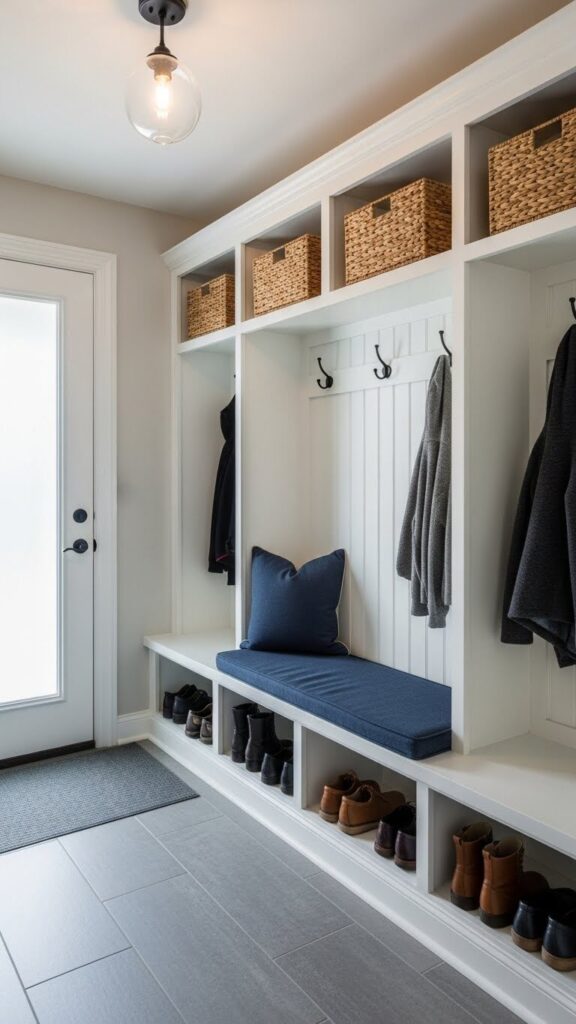
Imagine a dedicated mudroom nook where everything has its place—a comfortable bench for sitting, open shelves below for shoes, and hooks above for coats. It’s an entryway command center that keeps chaos at bay.
This built-in approach is perfect for homes with space to dedicate a corner or small room to coming and going. Organization becomes intuitive when everyone knows where their things belong.
Lower shelves should be positioned low enough for kids to reach their own shoes, promoting self-sufficiency and reducing daily stress.
Add a cushioned bench seat that lifts to reveal hidden storage beneath for seasonal shoes or less frequently worn pairs.
Put the Look Together: Use beadboard backing for texture and paint everything in durable semi-gloss finish for easy cleaning. Install adjustable shelving to accommodate changing storage needs as your family grows.
10. Vintage Trunk Repurposed for Storage
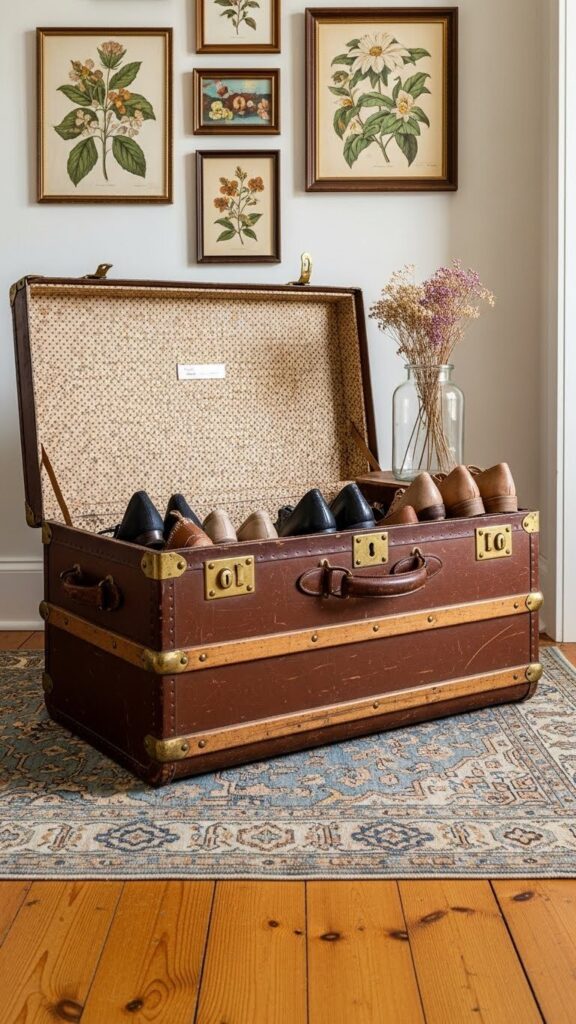
An old steamer trunk opens to reveal your shoe collection, blending storage with storytelling. The weathered leather and brass fixtures speak of travels and history, adding soul to your entryway.
Vintage trunks work beautifully in traditional, eclectic, or travel-inspired interiors where character pieces are celebrated. The closed lid keeps shoes hidden and provides a surface for decorative objects.
Line the interior with cedar panels or sachets to keep shoes fresh and protect against moisture. The deep interior can hold quite a few pairs when organized with dividers.
Keep the trunk easily accessible—avoid locking it unless you genuinely want to display it more than use it.
Recreate the Look: Hunt for authentic vintage trunks at estate sales, or find quality reproductions with aged finishes. Add furniture pads to the bottom to protect your floors from metal corners and rough surfaces.
11. Pegboard Wall with Hanging Shoe Organizers
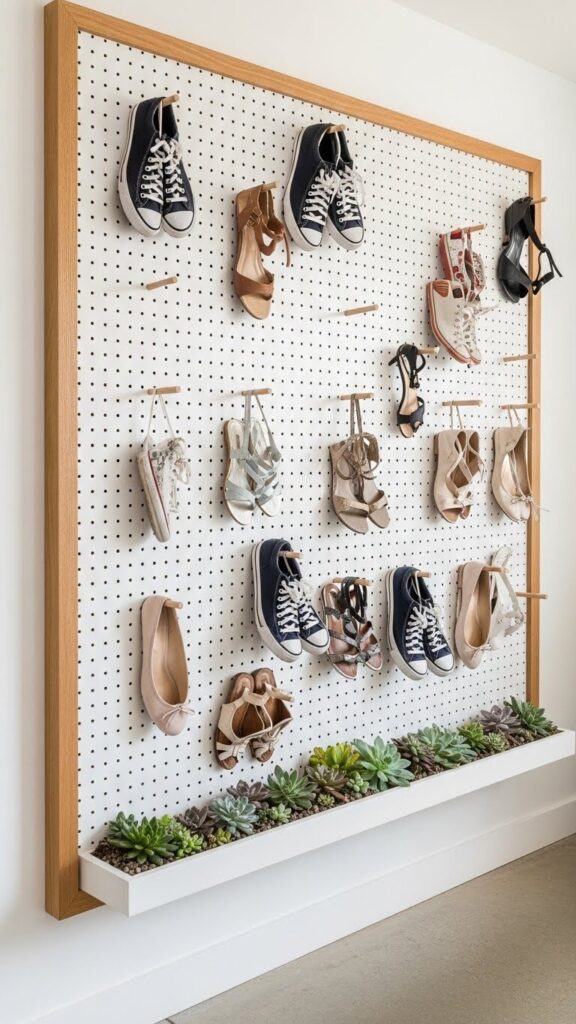
A pegboard wall transforms shoe storage into an art installation. Wooden pegs hold shoes by their heels and straps, creating a dynamic, three-dimensional display that’s endlessly reconfigurable.
This solution is ideal for sneaker collectors or anyone who wants their footwear to be part of the décor. The flexibility means you can adjust the layout as your collection changes.
Pegboard is incredibly versatile—you can add shelves, hooks, or baskets anywhere along the grid. Paint it in a bold color to make your shoe display pop.
This works best with structured shoes that can hang securely. Soft flats or delicate sandals might need small shelves or baskets attached to the pegboard instead.
How to Style This Scene: Install pegboard securely into wall studs, as the weight of multiple shoes adds up. Space pegs based on your shoes’ sizes, and don’t be afraid to leave empty space for visual breathing room.
12. Narrow Rolling Cart with Multiple Tiers
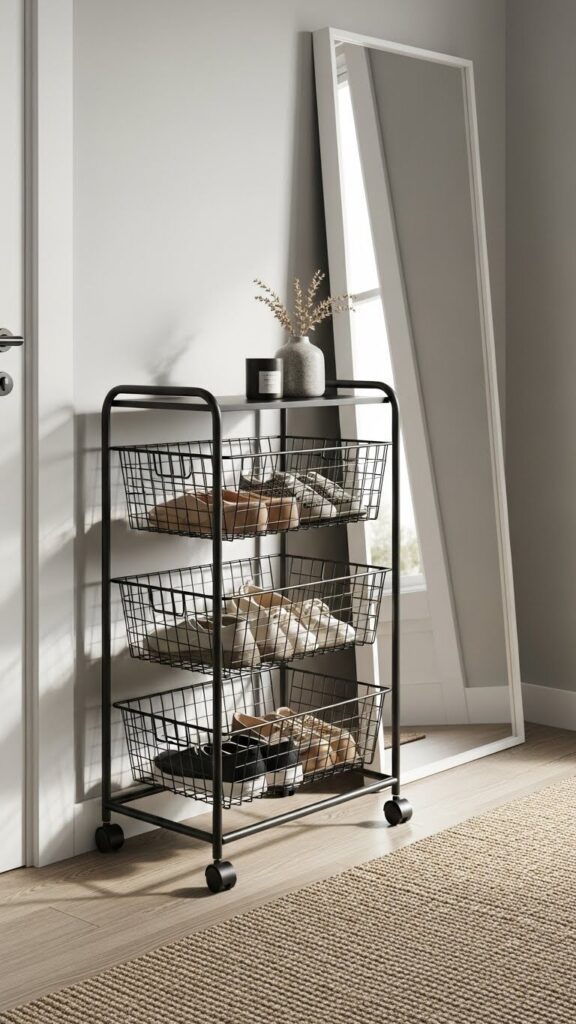
A slim rolling cart brings mobility to shoe storage—wheel it to where you need it, then tuck it away when company arrives. The tiered design maximizes vertical space without occupying much floor area.
Metal wire baskets allow air circulation while keeping shoes contained and organized. The industrial aesthetic suits modern, minimalist, or transitional spaces.
Choose a cart narrow enough to fit in tight spaces but stable enough that it won’t tip when fully loaded. Look for smooth-rolling casters, including at least one locking wheel.
This solution is perfect for renters who can’t install permanent fixtures or for anyone who wants flexibility in their space.
Create the Look: Select carts with tiers deep enough to accommodate adult shoes (at least 10 inches). Use the top tier for shoes you wear most frequently, and dedicate lower tiers to seasonal or occasional pairs.
13. Glass-Front Cabinet with Boutique Styling
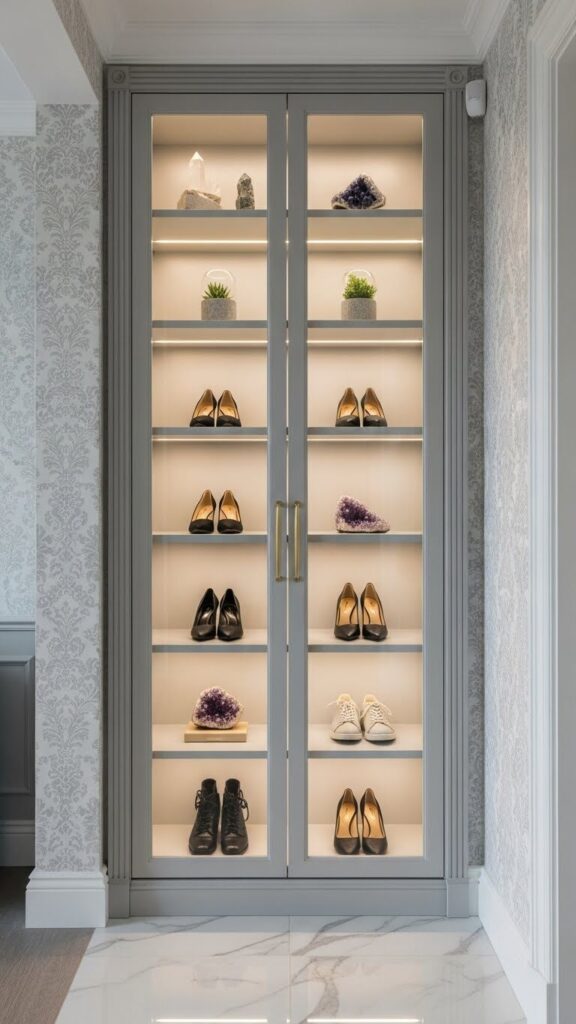
A glass-front cabinet elevates shoes to collectible status, displaying them like treasured objects behind protective doors. Soft interior lighting makes everything look magazine-worthy.
This approach is perfect for designer shoe collections or anyone who wants their footwear protected from dust while remaining visible. It brings a touch of luxury to everyday organization.
Style the interior thoughtfully—leave breathing room between pairs, and add small decorative elements like geodes, perfume bottles, or vintage books to create boutique appeal.
Choose a cabinet with adjustable glass shelves so you can customize the spacing for different shoe heights, from flats to heeled booties.
How to Achieve This Look: Install battery-operated LED strip lights inside for flattering illumination. Keep the glass clean and streak-free, and limit your display to shoes in excellent condition that you genuinely love.
14. Hidden Storage Ottoman in the Entryway
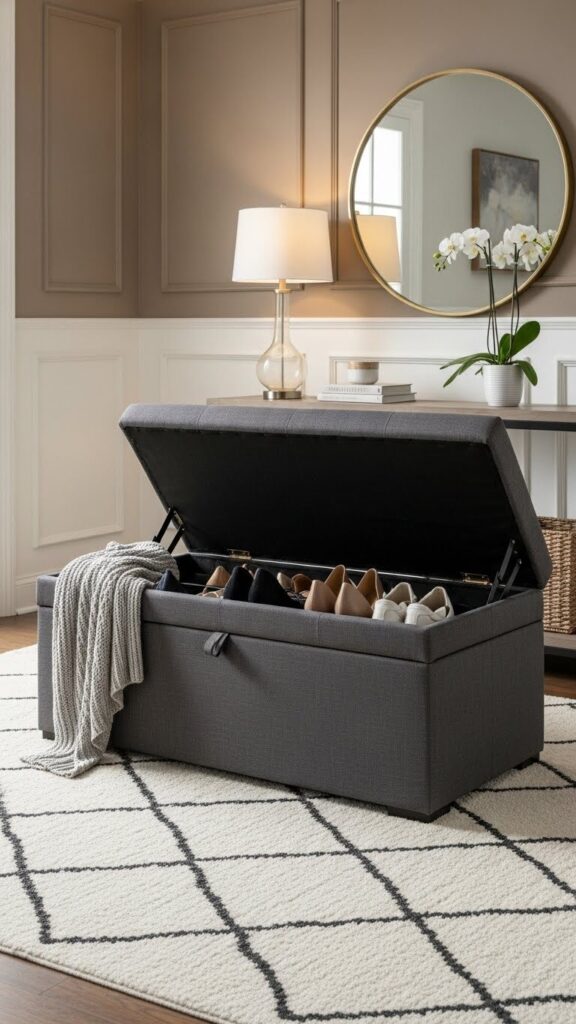
An upholstered ottoman sits innocently in your entryway, offering a perch for putting on shoes while secretly housing pairs inside its hidden compartment. It’s storage that masquerades as comfortable furniture.
This dual-purpose piece works beautifully in entryways that double as living spaces, where obvious storage solutions might feel too utilitarian. The soft upholstery adds warmth and comfort.
Choose an ottoman with a hinged or removable lid for easy access. Interior dimensions should accommodate at least 6-8 pairs of shoes for the investment to be worthwhile.
Select a durable, stain-resistant fabric since entryway pieces take a beating. Performance linens or treated cottons offer style without the stress.
Bring This Style Home: Add a wooden tray on top to create a stable surface for keys or a decorative vignette. Consider ottomans with interior dividers to keep shoes organized rather than jumbled together in a pile.
15. Rustic Crate Stacking System
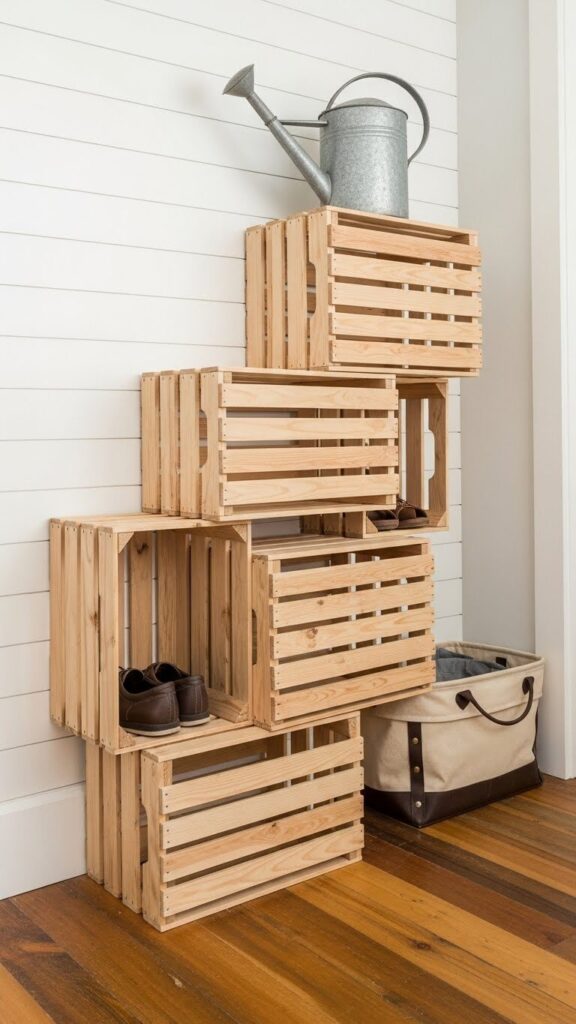
Weathered wooden crates stack in an artful arrangement, each one turned to create an open cubby for shoes. The rustic wood grain and rough edges bring farmhouse charm to functional storage.
This DIY-friendly solution is budget-conscious and endlessly customizable. Add or remove crates as your collection grows, and rearrange the configuration whenever you want a fresh look.
Secure crates together with wood screws and mount the entire unit to the wall for safety. Leave some crates empty or use them for decorative elements like plants or vintage finds.
The open design keeps shoes accessible and air circulating. It’s casual storage that embraces a lived-in, collected-over-time aesthetic.
Make It Yours: Source authentic vintage crates from antique shops or farmers markets for genuine character. Alternatively, purchase reproduction crates and age them with sandpaper and diluted stain for a weathered appearance.
16. Scandinavian-Inspired Minimal Shoe Rack
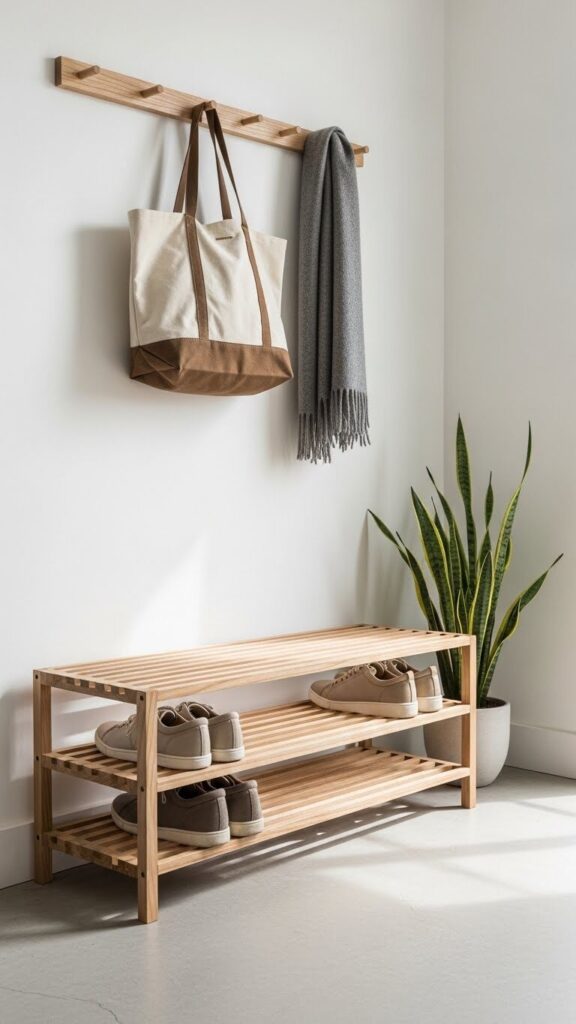
A low-slung shoe rack with clean horizontal slats embodies Scandinavian design principles—functional, beautiful, and free of excess. The light wood and simple construction create visual calm.
This minimalist approach suits small spaces and modern aesthetics where every piece must earn its place through both utility and beauty. The open slat design prevents shoes from feeling crammed.
Position the rack near your door but not blocking traffic flow. The low profile means it never dominates the space visually.
Limit what you store here to daily-wear shoes only, keeping the display edited and intentional. Seasonal or occasional shoes should live elsewhere.
Design It Yourself: Look for shoe racks made from sustainable materials like ash, oak, or bamboo. The natural wood finish needs no decoration—let the grain and craftsmanship speak for themselves.
17. Converted Dresser with Removed Drawers
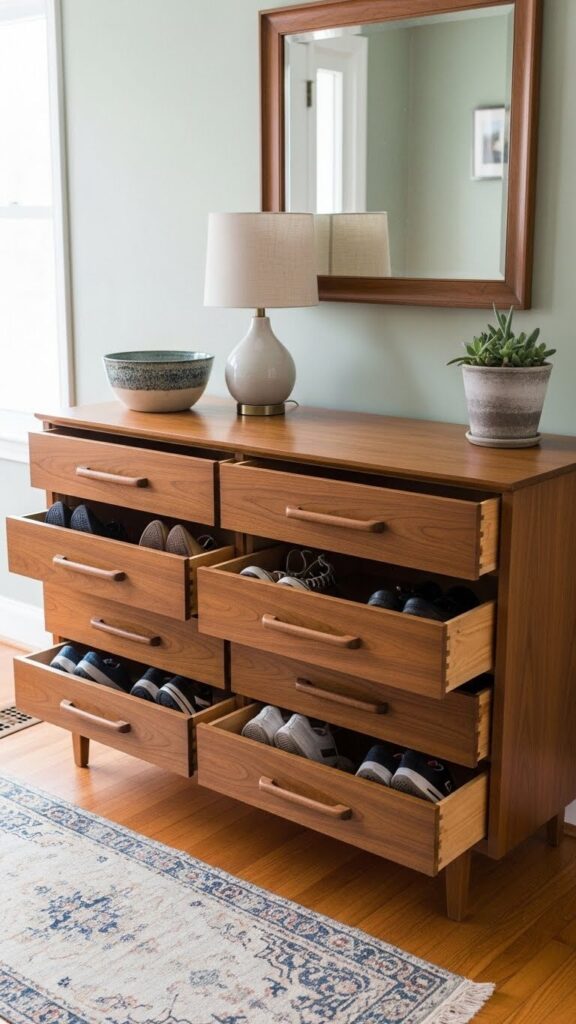
An old dresser gets new life with its drawers removed, transforming drawer openings into perfectly sized shoe cubbies. It’s unexpected storage that adds instant character and conversation.
This repurposing project works with any dresser style—mid-century modern, shabby chic, or traditional pieces all bring their unique personality. The existing structure provides stability and visual weight.
Leave drawer fronts attached and functioning for a few compartments to create concealed storage for less attractive shoes or cleaning supplies.
The dresser top becomes valuable surface space for everyday essentials, functioning like a console table while providing hidden storage below.
Try This at Home: Sand and paint or refinish the dresser to match your décor. Remove drawer slides if you’re taking out all drawers for a cleaner look. Consider adding decorative backing paper to each cubby for pops of color or pattern.
Today’s Inspiration
Creating beautiful shoe storage doesn’t mean sacrificing your personal style or settling for purely functional solutions.
Whether you’re drawn to the clean lines of Scandinavian minimalism, the warmth of farmhouse crates, or the sophisticated appeal of glass-front cabinets, there’s an approach here that’ll make your entryway both organized and inspiring.
The secret is choosing storage that works with your space, your collection, and your lifestyle—then styling it with the same care you’d give any other part of your home.
Your shoes deserve better than a pile by the door, and these ideas prove that organization can be genuinely beautiful.