
There’s something magical about a gallery wall that doesn’t follow the rules.
Instead of matching frames and perfect symmetry, eclectic gallery walls celebrate the beautiful chaos of mixing textures, colors, and styles that somehow just work together.
They tell your story through layers of vintage finds, modern prints, family treasures, and unexpected objects that catch the eye and spark conversation.
Eclectic Gallery Wall Ideas
Whether you’re working with a tiny apartment wall or a sprawling living room space, an eclectic gallery wall lets you break free from the matchy-matchy trends and create something that feels authentically, wonderfully you.
Ready to dive into some seriously inspiring ideas?
1. Vintage Frame Wonderland

Picture a wall alive with ornate gold frames in various sizes, each one slightly different from the next. The frames hold black-and-white family photos, botanical prints, and abstract sketches, creating a rich tapestry of old-world charm.
Soft afternoon light catches the gilded edges, making them shimmer against a deep charcoal wall that lets each frame sing. The contrast between the dark background and metallic frames creates an elegant, museum-quality feel.
This look thrives on the hunt for treasure. Scour thrift stores and estate sales for frames with character, then paint them all in complementary metallics like brass, copper, and gold.
Mix your artwork sizes freely, letting some frames overlap slightly for that lived-in, collected-over-time feel that makes guests lean in closer. The slight imperfections in vintage frames add authenticity that new frames simply can’t replicate.
How to Achieve This Look: Start with 3-5 larger frames as anchors, then fill in with smaller pieces. Lay everything out on the floor first to find your perfect arrangement.
Use a mix of 70% photos/art and 30% empty ornate frames for visual breathing room. Keep the color palette of your artwork muted so the frames remain the stars.
2. Color Block Canvas Mix

Imagine a wall bursting with energy through abstract canvas paintings in jewel tones—emerald greens, sapphire blues, and ruby reds. Each canvas is a different size, some square, some rectangular, creating a puzzle-like arrangement that feels playful yet sophisticated.
The thick painted textures catch the light differently throughout the day, making the wall feel alive. Brushstrokes and impasto techniques add dimensional interest that flat prints simply can’t achieve.
Choose canvases with similar color families but different intensities and patterns. Leave some breathing room between pieces instead of crowding them together.
This approach works beautifully in modern spaces that need a shot of personality without feeling too busy or overwhelming. The key is balancing bold colors with thoughtful spacing.
Style Tip: Pick one dominant color and let it appear in at least 60% of your canvases. Add two accent colors in varying shades. Arrange pieces in a loose grid pattern, keeping 2-4 inches between each canvas. Start with your largest piece slightly off-center to create visual interest.
Quick Styling Checklist
Before you start hammering nails, run through this simple checklist to set yourself up for success. Gather all your pieces in one room and photograph them together—you’ll spot what’s missing or what doesn’t fit.
Consider your wall’s natural light and choose artwork that won’t fade.
Measure your wall space and mark the center point with removable tape. Collect your hanging hardware ahead of time, including picture hooks, nails, and a level.
Finally, remember that eclectic doesn’t mean random—there should be a thread connecting your pieces, whether it’s color, theme, or frame style.
3. Textile and Frame Fusion

A warm taupe wall showcases woven wall hangings alongside framed watercolors, creating texture that you almost want to touch. Macramé pieces in cream and natural jute hang beside delicate pressed flowers under glass, while a small embroidery hoop adds handmade charm.
The combination of soft textiles and rigid frames creates a dynamic conversation between materials. Different weaving patterns and fiber textures add tactile depth that makes the wall feel inviting and cozy.
Layer your textiles at varying heights to create depth and shadow play. Hang woven pieces slightly away from the wall using wooden dowels or branches for dimension.
Intersperse them with framed artwork that picks up the neutral tones in your textiles, creating a cohesive yet varied display. The neutral palette keeps everything feeling calm despite the material variety.
How to Achieve This Look: Mount textile pieces first as they’re harder to adjust once hung. Add framed pieces around them, keeping 3-5 inches of space.
Use museum putty under frame corners to keep everything level. Mix circular embroidery hoops with rectangular frames for shape variety. Choose textiles with different weaving patterns to maintain visual interest.
4. Black and White Photography Story

Clean white walls become a canvas for dramatic black-and-white photographs in mismatched frames. Some images are crisp and modern, others grainy and vintage, but they all share the timeless quality of monochrome photography.
The frames range from sleek black wood to distressed white painted finishes, creating visual interest without color distraction. This approach feels both sophisticated and personal, like walking through someone’s life story.
Mix your photo subjects—landscapes, portraits, architecture, and abstract details. The variety in subject matter keeps eyes moving across the wall, discovering new favorite images with each glance.
Keep your frame colors limited to black, white, and natural wood tones. This restraint lets the photographs themselves become the focal point while the eclectic frame styles add personality.
Style Tip: Create rhythm by repeating similar frame sizes in a loose pattern across your wall. Include at least one oversized statement photo as an anchor. Mix glossy and matte prints for subtle texture variation. Leave consistent spacing between frames—about 2-3 inches works well for this cleaner aesthetic.
How to Choose the Right Theme
Your gallery wall theme should reflect what makes you happy every time you look at it. Start by gathering images, objects, and artwork you love without overthinking it.
Lay them out together and look for natural connections—maybe they’re all nature-inspired, or perhaps they share a color you’re drawn to.
Don’t force a theme that doesn’t resonate with your actual life and interests. If you love travel, lean into maps and destination photos.
If you’re a plant person, botanical prints and pressed flowers make sense. The most successful eclectic gallery walls feel authentic because they genuinely represent the person who created them.
5. Mirror and Art Medley

Reflective surfaces dance with artwork on a sage green wall, creating depth and light play that transforms throughout the day. Ornate mirrors in various shapes—round, oval, and rectangular—nestle between oil paintings and pencil sketches.
The mirrors bounce light around the room while visually expanding the space. Each reflective surface offers a different perspective of the room, adding an unexpected interactive element to your gallery wall.
Choose mirrors with interesting frames that complement your artwork rather than compete with it. Antique mirrors with slight imperfections in the glass add character and vintage appeal.
Position mirrors strategically to reflect windows or light sources, maximizing the brightness they bring to your space. Mix mirror sizes just as you would with artwork, using larger pieces as anchors.
How to Achieve This Look: Hang your largest mirror first at eye level, then build around it with art and smaller mirrors. Keep mirrors to about 30-40% of your total wall coverage so they enhance rather than dominate.
Clean mirrors regularly to maintain their reflective quality. Consider the view each mirror will reflect before mounting it permanently.
6. Three-Dimensional Object Wall
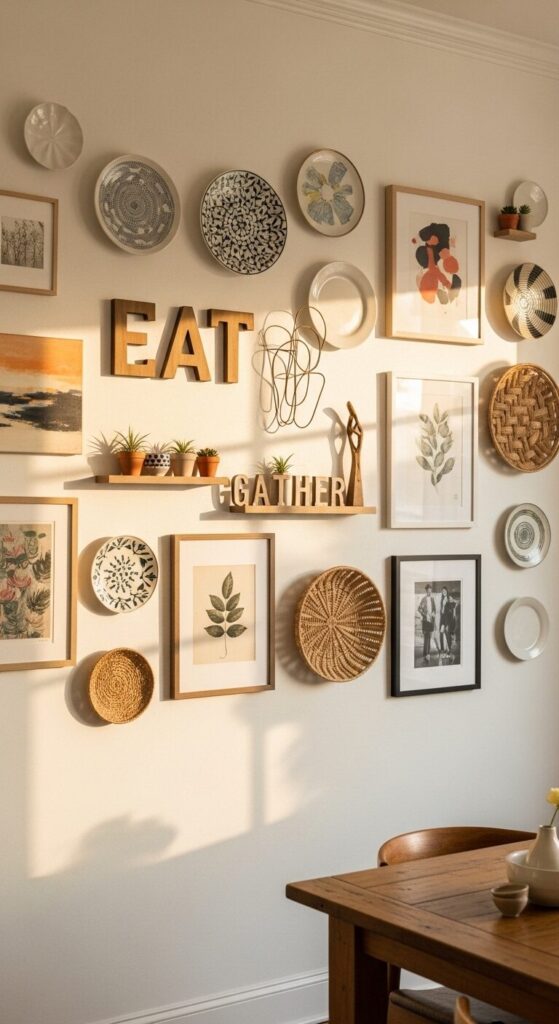
Step beyond flat art with a wall that incorporates sculptural elements—ceramic plates, wooden letters, small shelves, and metal wall sculptures. The play of shadows and depth creates visual interest that changes with the light throughout the day.
Against a creamy white wall, each three-dimensional piece casts its own shadow, effectively doubling the visual impact. This approach transforms your wall into an ever-changing art installation.
Mix materials thoughtfully—glazed ceramics, raw wood, brushed metal, and woven baskets all bring different textures to the composition. Each material reflects light differently, adding complexity to your display.
Start with larger sculptural pieces as focal points, then fill in with flatter artwork and smaller objects. The dimensional variety keeps the eye engaged and makes the wall feel dynamic.
Style Tip: Mount heavier three-dimensional items with proper wall anchors rated for their weight. Create visual balance by distributing heavy pieces evenly across the wall rather than clustering them.
Mix shallow-depth items (like plates) with deeper pieces (like small shelves) for layered interest. Keep the color palette cohesive even as you vary materials.
Budget-Friendly Tips
Creating a stunning eclectic gallery wall doesn’t require a trust fund. Start by shopping your own home—that artwork hiding in closets, family photos in drawers, and mirrors you’ve forgotten about all have potential.
Thrift stores and estate sales are goldmines for unique frames that you can easily spray paint to coordinate.
Print your own digital art from free online sources or frame fabric swatches and wallpaper samples for textured interest. Ask family members for old photos you can copy and frame.
Create your own abstract art with inexpensive canvas boards and acrylic paint—imperfect and handmade adds to the eclectic charm. Dollar stores often carry basic frames that look expensive once you remove the generic art and add your own.
7. Botanical Garden Wall
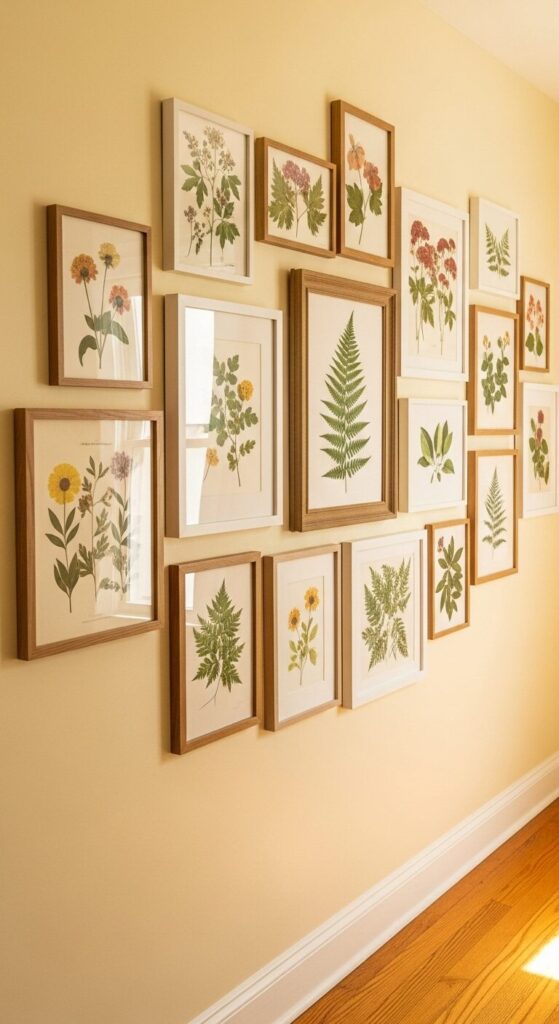
Lush greenery comes to life through pressed plants, botanical illustrations, and framed leaf prints on a soft butter-yellow wall. Vintage-style botanical drawings mix with modern photography of ferns and monstera leaves, creating a garden that never needs watering.
The warm yellow background makes the greens pop with extra vibrancy, like sunshine filtering through a forest canopy. Different shades of green—from sage to emerald to olive—create natural variation.
Include both detailed scientific illustrations and loose watercolor interpretations of plants for stylistic variety. Real pressed flowers and leaves under glass add authentic texture and connection to nature.
Frame choices can range from natural wood to painted white, but keeping frames light allows the botanical subjects to remain the focus. This look brings the outdoors in without overwhelming your space.
How to Achieve This Look: Press your own flowers and leaves between heavy books for two weeks before framing. Mix illustrated botanicals with photographic prints in a 60/40 ratio.
Arrange pieces to create a loose, organic flow rather than rigid symmetry. Include varied plant types—flowers, leaves, ferns, and herbs—for visual diversity.
8. Travel Memory Lane
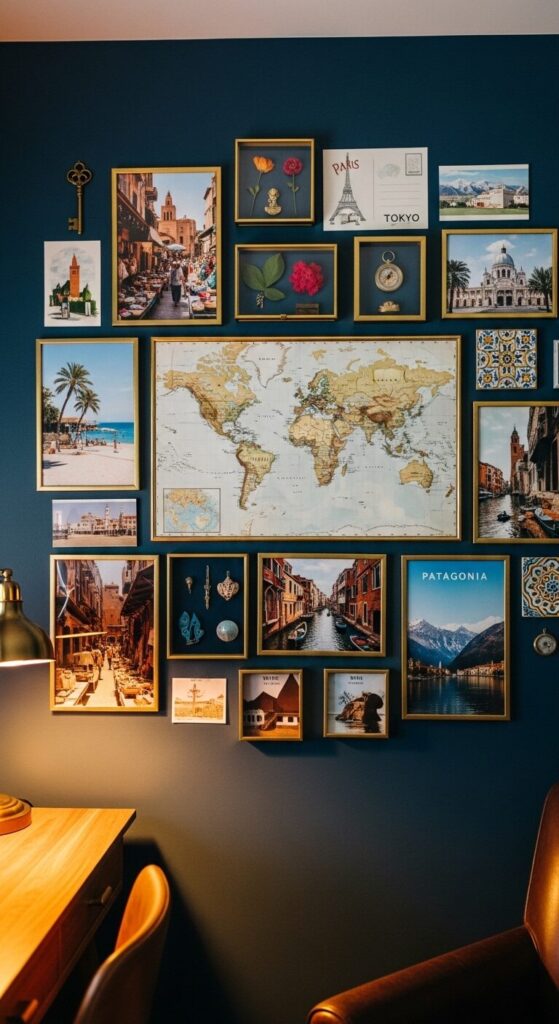
Postcards, maps, ticket stubs, and photographs from adventures create a personal travel gallery on a deep navy wall. A vintage world map serves as the anchor, surrounded by smaller frames holding memories from different journeys.
The dark background makes colorful travel photos and illustrated postcards pop with extra intensity. Metallic gold and copper frames add a sense of wanderlust and adventure.
Mix professional photographs with candid snapshots and ephemera like boarding passes or museum tickets for authentic storytelling. Each piece represents a place or experience, turning your wall into a visual travel journal.
Include small labels or captions under items if you want, but let the images speak for themselves. This wall grows over time as you add new adventures and memories.
Style Tip: Use shadow boxes for three-dimensional travel souvenirs like sand, shells, or small trinkets. Create clusters by destination rather than scattering randomly.
Include a large world map as your central piece, then build outward. Update seasonally by rotating in photos from recent trips to keep the display fresh and meaningful.
9. Monochromatic Modern Mix
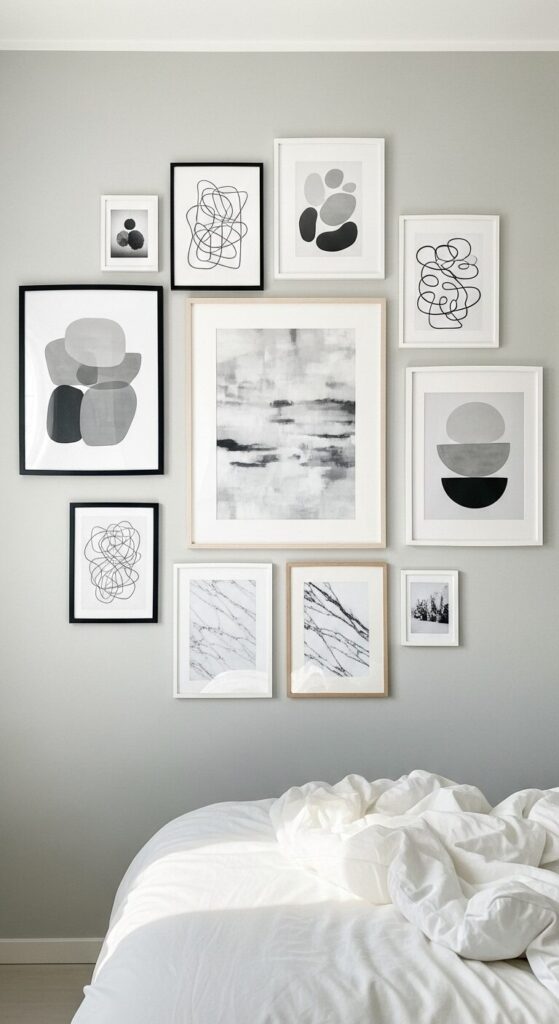
Shades of gray, white, and black create a sophisticated gallery wall that feels calming yet interesting. Abstract paintings, line drawings, marble prints, and minimalist photography all work within this restrained palette.
Against a pale gray wall, the subtle variations in tone create depth without demanding attention. This approach feels gallery-like and refined, perfect for modern or Scandinavian-inspired spaces.
Vary your textures within the monochrome palette—matte prints, glossy photographs, canvas paintings, and charcoal drawings all contribute different surface qualities. The textural variety prevents the limited color scheme from feeling flat.
Frame choices should echo the minimal aesthetic with clean lines in black, white, or light wood. This look proves that eclectic doesn’t always mean colorful—it’s about mixing styles thoughtfully.
How to Achieve This Look: Choose pieces with different tonal values from light gray to charcoal for visual depth. Include at least one piece with interesting texture, like an abstract canvas or mixed media work.
Arrange in a grid-like pattern with consistent spacing for a modern feel. Keep frame styles simple and uniform to maintain the minimalist vibe.
Color Palettes That Work Best
Successful eclectic gallery walls often have an underlying color story that ties everything together. Earth tones—terracotta, sage, cream, and warm browns—create cozy, lived-in spaces that feel welcoming.
Jewel tones like emerald, sapphire, and amethyst bring drama and sophistication.
If you prefer softer looks, pastels in blush, mint, and powder blue create dreamy, romantic walls. Monochromatic schemes using variations of one color offer impact without visual chaos.
Don’t be afraid of bold contrast—black and white with a pop of red or mustard yellow creates striking focal points. The key is choosing your palette first, then selecting pieces that fall within it, even if styles vary wildly.
10. Industrial Rustic Blend
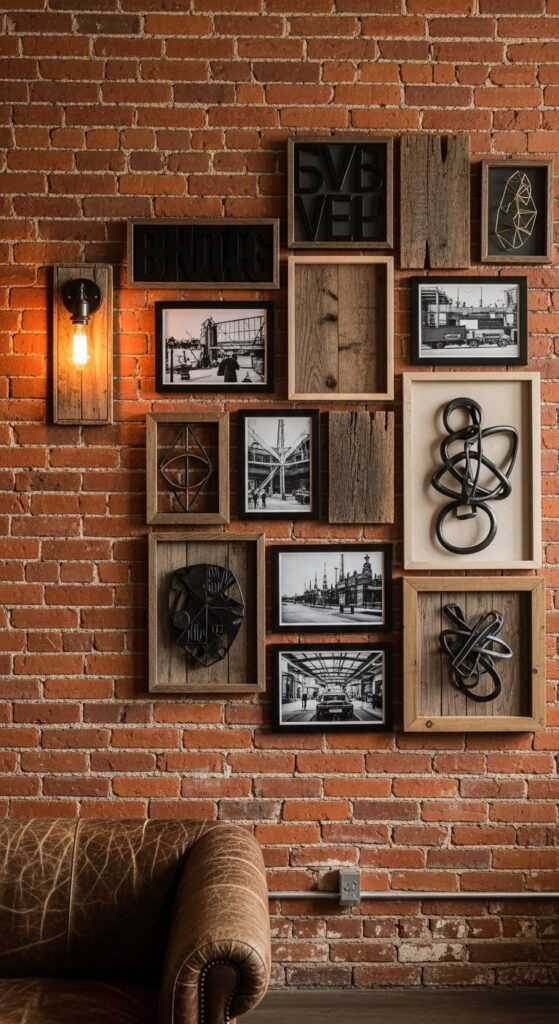
Raw wood frames, metal wall art, and black-and-white photography combine on an exposed brick wall for urban loft appeal. Weathered wood pieces with visible grain sit next to sleek metal typography and vintage industrial prints.
The texture of the brick provides a rich backdrop that adds warmth to the cooler metal elements. Edison bulb sconces or metal pipe shelves integrated into the gallery add functional dimension.
This style celebrates imperfection—distressed frames, slightly rusted metal accents, and aged photographs all contribute to the industrial aesthetic. The mix of natural and manufactured materials creates interesting tension.
Keep your color palette neutral with blacks, browns, grays, and raw metal tones. Any pops of color should come from the artwork itself rather than frames or accessories.
Style Tip: Incorporate small industrial elements like metal corner brackets or pipe shelves into your gallery design. Mix frame depths to create a shadow-box effect against the textured brick.
Include at least one large metal piece as a statement element. Balance heavy industrial items with lighter wood frames to prevent the wall from feeling too harsh.
11. Pastel Dream Collection

Soft blush pinks, mint greens, and powder blues create a gallery wall that feels like a gentle watercolor painting. Delicate florals, abstract washes of color, and dreamy landscape photography all work within this soothing palette.
Against a crisp white wall, the pastels maintain their softness while still making a statement. Gold and rose gold frames add just enough shimmer without overwhelming the gentle color story.
Mix different artistic styles—watercolors, digital art, photography, and illustrated prints—to keep the softness from becoming too saccharine. The variety in medium and subject matter adds sophistication to the sweet palette.
This approach works beautifully in bedrooms, nurseries, or any space where you want to create a calm, peaceful atmosphere. The colors promote relaxation while still offering visual interest.
How to Achieve This Look: Select pieces where pastels are the dominant colors but not the only ones present—touches of white, cream, or soft gray add depth.
Use white or light wood matting inside frames to give artwork breathing room. Arrange pieces with generous spacing to maintain the airy, light feeling. Include at least one slightly larger piece to anchor the collection.
12. Family Heritage Wall

Multigenerational family photos mix with heirloom objects, vintage documents, and inherited artwork to create a deeply personal gallery. Sepia-toned grandparent photos sit beside colorful snapshots of grandchildren, telling a family story across decades.
On a warm beige wall, the timeline of memories feels cohesive despite spanning different eras and photography styles. Ornate vintage frames for older photos contrast beautifully with simpler modern frames for recent pictures.
Include meaningful objects beyond photos—framed wedding invitations, baby announcements, military medals in shadow boxes, or grandmother’s handwritten recipes. These three-dimensional elements add layers of meaning and texture.
This wall becomes a conversation starter and a way to keep family history alive and visible. Children grow up seeing where they come from, creating connection across generations.
Style Tip: Arrange pieces loosely by timeline, with oldest items at the top and newest at the bottom, or cluster by family branch. Use archival materials to protect precious old photographs from fading.
Include name labels or small date tags beneath photos for context. Leave space to add new family milestones and memories as they happen.
Mixing Frame Styles Successfully
The secret to eclectic gallery walls is knowing when to match and when to mix. If your artwork is bold and colorful, simpler frames in coordinated finishes help unify the chaos. If your art is subtle and tonal, varied frame styles add the visual interest your wall needs.
Limit yourself to three frame finishes—like black, gold, and natural wood—so variety doesn’t become confusion. Consider frame width too; mixing thin and chunky frames adds dimension.
Keep all frames either matte or glossy rather than mixing finishes. Most importantly, step back frequently as you work to see how pieces relate to each other from viewing distance.
13. Vintage Poster Parade

Retro travel posters, old movie advertisements, and vintage concert bills create a nostalgic gallery bursting with mid-century color and typography. Bold graphics in oranges, teals, and mustard yellows transport viewers to another era.
Against a soft gray wall, the vintage colors maintain their authenticity without overwhelming the space. Simple black frames let the graphic designs and vibrant colors take center stage.
Mix authentic vintage posters with quality reproductions to fill your space without breaking the bank. The illustrated style of mid-century design brings artistic flair that photography can’t replicate.
Arrange posters in a loose salon-style hang with varied spacing that feels relaxed and approachable. This look works perfectly in entertainment spaces, game rooms, or anywhere you want a fun, energetic vibe.
How to Achieve This Look: Print high-quality reproductions of vintage posters on matte paper for authenticity. Keep frames uniform in style to let the varied poster designs create the eclectic feeling.
Arrange pieces so colors are distributed evenly across the wall rather than clustered. Include at least one or two oversized posters as statement pieces among smaller ones.
14. Nature and Wildlife Celebration
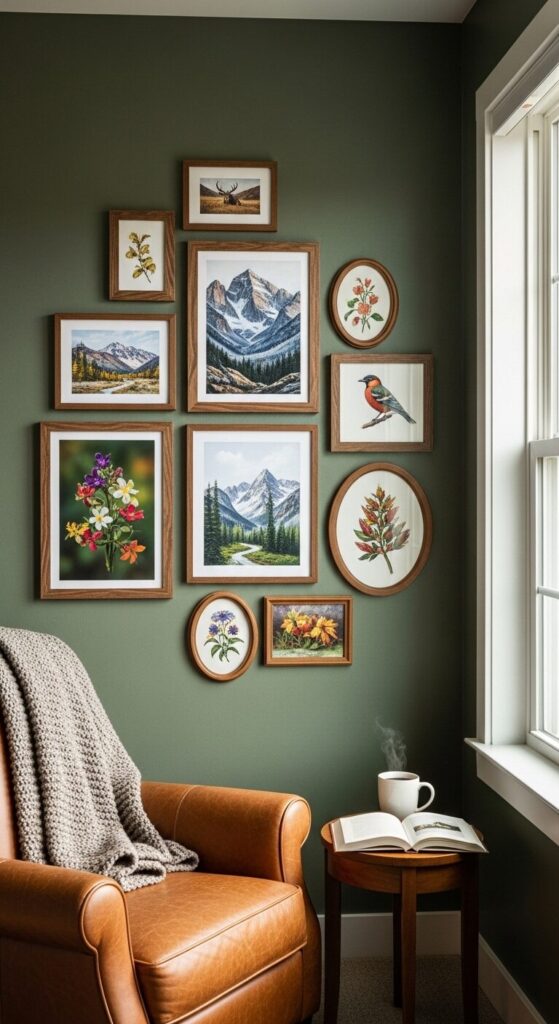
Wildlife photography, nature prints, and landscape paintings bring the great outdoors inside on a forest green wall. Majestic mountain ranges, intimate bird portraits, and macro shots of flowers create a nature lover’s paradise.
The rich green background enhances the natural subjects, making greens greener and bringing warmth to earth-toned landscapes. Wood frames in various stains echo the natural theme while adding textural variety.
Mix different scales—from sweeping vistas to intimate close-ups of insects or dewdrops—to create visual rhythm and keep viewers engaged. Include both color and black-and-white nature photography for stylistic contrast.
This gallery wall works beautifully in living rooms, home offices, or anywhere you want to create a connection to the natural world. It’s especially powerful in urban homes where nature views are limited.
Style Tip: Choose images that represent different ecosystems—forest, desert, ocean, mountain—for variety. Mix photographic realism with artistic interpretations like watercolor landscapes.
Use varying frame widths to create depth perception. Include at least one dramatic statement piece, like a large mountain landscape or close-up animal portrait.
15. Graphic Art and Typography
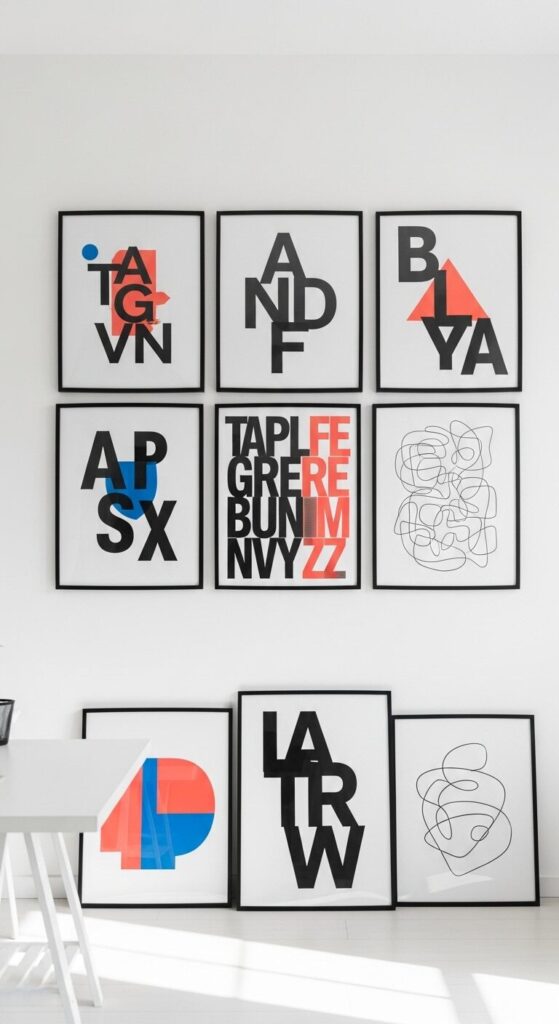
Bold typography prints, geometric designs, and graphic illustrations create a modern gallery wall with architectural appeal. Black-and-white graphic elements mix with pops of single bright colors like coral or electric blue.
On a white wall, the high-contrast designs make maximum impact, creating a gallery that feels crisp and intentional. The clean lines and modern aesthetic work perfectly in contemporary homes and minimalist spaces.
Mix inspirational word art with abstract geometric patterns and modern line illustrations for variety in purpose and style. The graphic nature of the pieces creates unity even when subjects differ greatly.
This approach is budget-friendly since you can easily create or download and print many graphic designs yourself. Simple black frames keep the focus on the bold designs themselves.
How to Achieve This Look: Maintain strong contrast in your pieces—mostly black and white with strategic color pops. Create a loose grid arrangement rather than organic clustering for a modern feel.
Use identical frame styles in black for cohesion. Include varied graphic styles—typography, geometric shapes, line art, and patterns—to prevent monotony while maintaining the modern aesthetic.
Creating Visual Balance
Balance doesn’t mean symmetry in eclectic gallery walls, but it does mean distributing visual weight thoughtfully.
Imagine your wall divided into quadrants—each section should have a mix of large, medium, and small pieces rather than all big items in one area. Darker or bolder pieces carry more visual weight, so spread them across your wall.
Create triangle formations with your eye naturally connecting three anchor pieces, then fill in around those triangles. Mix busy, detailed pieces with simpler ones so the eye has places to rest.
Step back every few pieces to check if one area feels too heavy or too sparse. The goal is for your eye to move comfortably across the entire wall without getting stuck or finding empty visual spaces.
16. Shelf and Frame Combination
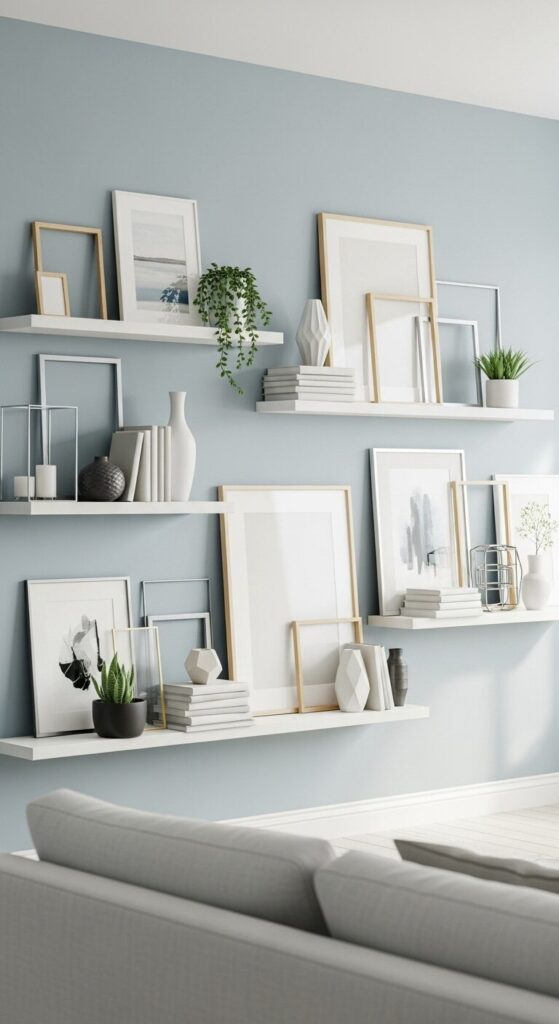
Small floating shelves integrated among framed artwork create a dynamic, layered gallery wall with practical storage. Books, small plants, and decorative objects rest on shelves while artwork fills the spaces between and around them.
Against a light blue-gray wall, the white shelves and varied frames create an airy, collected-over-time feeling. The three-dimensional quality of the shelves adds depth that pure wall art can’t achieve.
This approach allows you to easily rotate items and refresh your gallery without rehanging everything. Swap out shelf items seasonally or whenever you find new treasures to display.
Mix shelf lengths and positions, placing some horizontally and others at slight angles for visual interest. The shelves break up the wall surface while maintaining the eclectic gallery aesthetic.
Style Tip: Install shelves first, spacing them irregularly rather than in straight lines. Keep shelf styling minimal—2-3 small items per shelf maximum. Choose objects that complement your artwork’s color palette.
Lean smaller framed pieces on shelves instead of hanging them for a casual, approachable vibe. Maintain visual lightness by not overcrowding any one shelf.
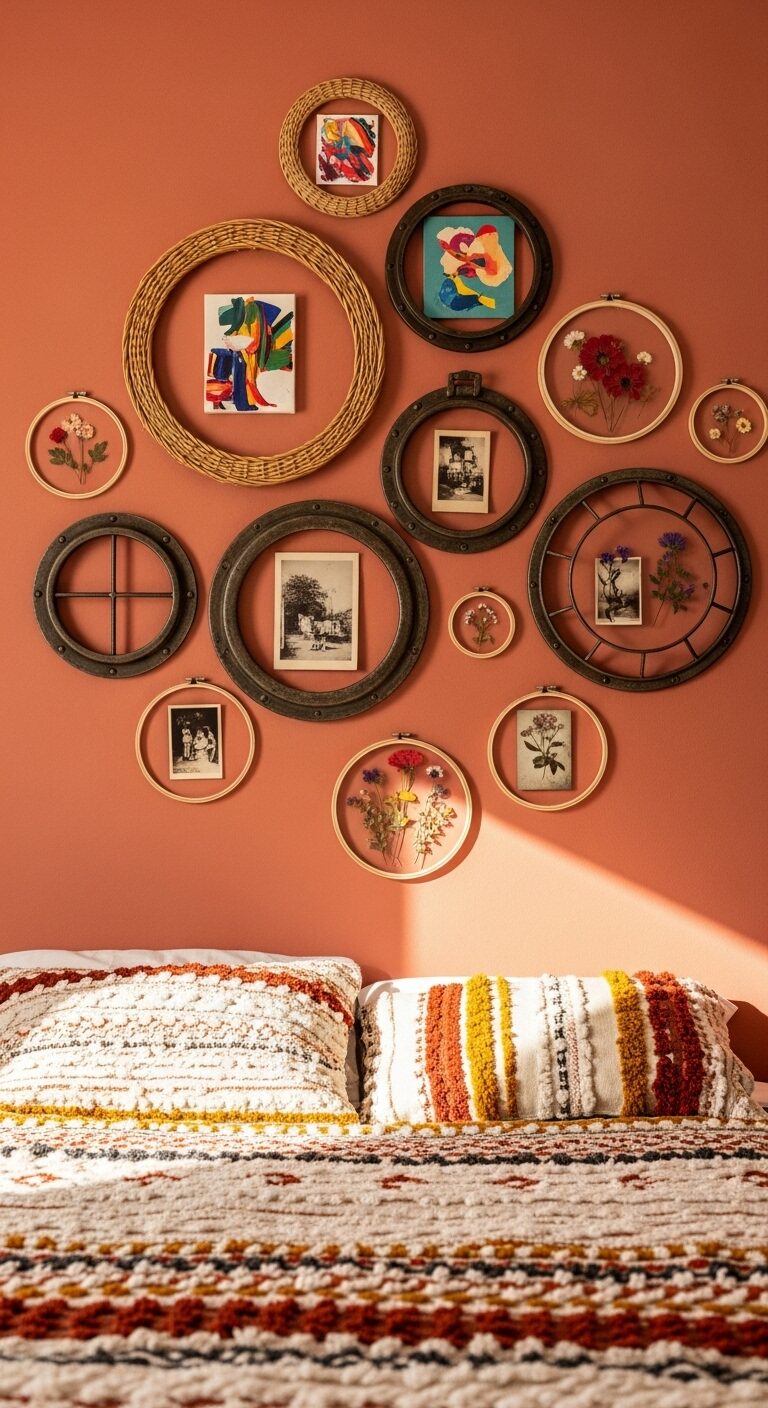
17. Round Frame Rhapsody
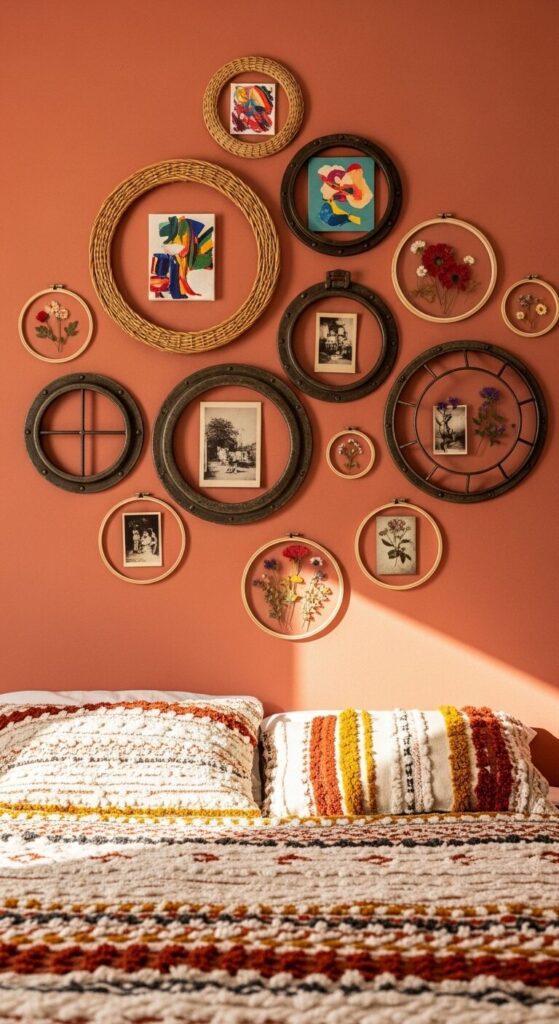
Circular frames in various sizes create a gallery wall that breaks free from rectangular monotony. Round mirrors, porthole-style frames, and embroidery hoops hold everything from abstract art to vintage photos.
On a terracotta-colored wall, the round shapes create a playful, almost bubble-like effect that feels organic and unexpected. The warm background makes every frame pop while maintaining an earthy, grounded feeling.
Mix frame materials—wicker, wood, metal, and plastic—all in circular forms to maintain the theme while adding textural variety. The rounded shapes soften the overall look and feel more approachable than sharp rectangular corners.
Arrange circles in an asymmetrical cluster rather than trying to line them up, which would feel too rigid for this organic shape. Let some overlap slightly or nestle into spaces between larger circles.
How to Achieve This Look: Start with your largest circle in a slightly off-center position. Build outward with progressively smaller circles. Mix frame thicknesses from delicate thin hoops to chunky round mirrors.
Vary the “weight” of what’s inside frames—some bold and graphic, others soft and subtle. Keep 1-2 inches between most circles to define each piece clearly.
18. Maximum Maximalist Display

Floor-to-ceiling coverage transforms an entire wall into an immersive art experience with dozens of pieces of varying sizes, styles, and subjects. Every inch feels intentional yet collected, like walking into an artist’s studio or eclectic antique shop.
Against a jewel-tone purple wall, the dense arrangement creates drama and richness that demands attention. Gold, black, white, and wood frames all coexist, united by the bold background color and thoughtful spacing.
This look isn’t about restraint—it’s about celebrating abundance and surrounding yourself with things you love. Mix every style we’ve discussed: vintage frames, modern prints, textiles, mirrors, objects, and shelves all appear in this ultimate eclectic statement.
The key is maintaining small, consistent spacing between items rather than random gaps. This creates rhythm and makes even maximum density feel organized rather than chaotic.
How to Achieve This Look: Start with your largest anchor pieces placed strategically across the wall. Fill in systematically, moving section by section rather than randomly adding pieces.
Maintain 1-2 inches of consistent spacing between all items. Create a paper template of your wall and cut out shapes representing each piece to plan before hanging. Step back frequently to check for balance and breathing room.
Final Styling Secrets
As you complete your gallery wall, remember these finishing touches that elevate good to great. Use a level for every single piece—even intentionally eclectic walls look better when individual items hang straight.
Install proper hardware rated for each item’s weight to prevent disasters.
Consider lighting—picture lights, track lighting, or even string lights can add ambiance and highlight your favorite pieces after dark.
Don’t hang everything at once; live with your arrangement for a few days before making it permanent. Take photos with your phone to see how it reads from across the room.
Most importantly, don’t be afraid to edit. If something isn’t working, swap it out. Your gallery wall should evolve with you, not feel like a permanent decision you’re stuck with. The beauty of eclectic style is that it welcomes change and growth.
Wrapping Up Your Gallery Journey
Creating an eclectic gallery wall is less about following rules and more about trusting your instincts and celebrating what you love.
Whether you go minimal with a handful of carefully chosen pieces or maximalist with wall-to-wall coverage, the result should make you smile every time you walk past it.
Start with the ideas that resonate most with your personal style, then let your wall evolve naturally over time.
Add new finds, rotate seasonal pieces, and don’t be afraid to completely rearrange things when inspiration strikes. Your gallery wall is a living, breathing reflection of who you are.
The walls in your home are blank canvases waiting for your story. So gather those thrift store frames, dig out forgotten photos, and start creating something beautifully, wonderfully, eclectically you. Happy decorating!