
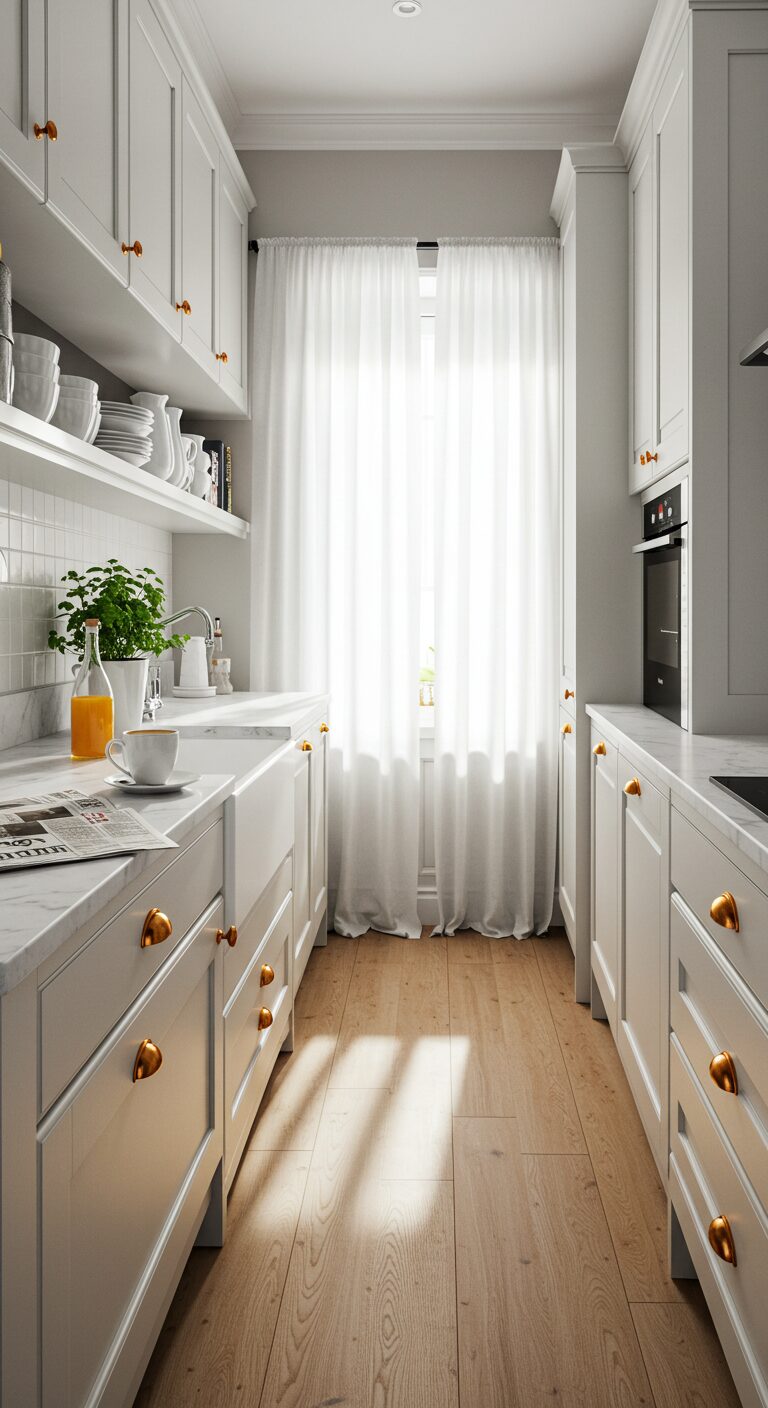
Working with a narrow kitchen doesn’t mean sacrificing style or functionality.
I’ve spent years helping homeowners transform cramped cooking spaces into efficient, beautiful areas that feel surprisingly spacious.
The key is understanding that every inch counts when you’re dealing with limited width.
Smart design choices can make your narrow kitchen not just workable, but genuinely enjoyable to cook in.
Narrow Kitchen Ideas

Whether you’re dealing with a galley layout or a slender single-wall setup, these ideas will help you maximize your space.
Let’s explore practical solutions that blend clever storage, visual tricks, and design savvy to make your narrow kitchen shine.
1. Install Floor-to-Ceiling Cabinets

Vertical space is your best friend in a narrow kitchen. Floor-to-ceiling cabinets draw the eye upward and create abundant storage without eating into your limited floor space.
I always recommend this approach because it eliminates that awkward gap above standard cabinets where dust collects. You’ll gain precious storage for items you don’t use daily.
The tall cabinets also create a custom, built-in look that makes the room feel more intentional. Choose lighter colors to prevent the space from feeling closed in.
2. Choose a Galley Layout

The galley layout is specifically designed for narrow spaces. Two parallel counters create an efficient work triangle that minimizes unnecessary movement while cooking.
This setup puts everything within arm’s reach. You can pivot between prep, cooking, and cleaning stations without taking more than a step or two.
Keep the walkway between counters at least 42 inches wide for comfortable movement. This prevents that cramped hallway feeling while maintaining efficiency.
3. Use Light Color Schemes

Light colors reflect natural light and make narrow kitchens feel more open. Whites, soft grays, and pale blues expand the visual space dramatically.
This doesn’t mean everything must be stark white. Layering different light tones adds depth while maintaining that airy feeling.
Paint your walls, cabinets, and ceiling in coordinating light shades. The continuity tricks the eye into perceiving more square footage than actually exists.
4. Add a Rolling Kitchen Cart

A mobile cart provides extra prep space and storage that you can move wherever needed. When you’re done cooking, simply roll it aside to open up the walkway.
Look for carts with butcher block tops that can serve as additional cutting surfaces. Storage shelves underneath keep frequently used items accessible.
The mobility factor is crucial in narrow kitchens. You can position it as an island while cooking, then tuck it away during meals.
5. Install Open Shelving

Open shelves create visual breathing room that closed cabinets can’t match. They make narrow kitchens feel less boxy and more curated.
Display your prettiest dishes, glassware, and everyday essentials on these shelves. The openness allows light to travel through the space rather than stopping at cabinet doors.
Keep items organized and color-coordinated to maintain a clean, intentional look. Cluttered open shelves will have the opposite effect you’re going for.
6. Incorporate Slim Appliances

Standard-depth appliances can overwhelm narrow kitchens. Counter-depth refrigerators and slim dishwashers maintain functionality while preserving valuable walking space.
These slimmer profiles create a streamlined look where appliances don’t protrude awkwardly. Your kitchen will feel more cohesive and less cluttered.
Many manufacturers now offer 18-inch dishwashers and 24-inch ranges designed specifically for compact spaces. They’re fully functional despite their smaller footprint.
7. Use Mirrors or Reflective Surfaces

Reflective surfaces bounce light around and create the illusion of doubled space. A mirror backsplash or glossy tile can transform how spacious your narrow kitchen feels.
High-gloss cabinet finishes work similarly, reflecting light from windows and fixtures. The room appears brighter and more open than with matte surfaces.
Consider mirrored cabinet fronts on upper units or a full mirror on one end wall. The reflection adds perceived depth to your narrow footprint.
8. Install Under-Cabinet Lighting

Proper lighting eliminates shadows and makes narrow spaces feel more open. Under-cabinet LED strips illuminate countertops beautifully while adding ambiance.
This task lighting makes food prep easier and safer. No more working in your own shadow when standing at the counter.
The light washing down the backsplash creates depth and highlights your design choices. It’s both functional and atmospheric, especially in the evening.
9. Choose Sliding or Pocket Doors

Traditional swinging doors require clearance space that narrow kitchens can’t afford. Sliding barn doors or pocket doors eliminate this wasted area.
These space-saving options allow you to close off the kitchen when needed without sacrificing precious square footage. They’re both practical and stylish.
If your kitchen opens to living areas, consider eliminating the door entirely. The visual connection to adjacent rooms makes everything feel more spacious.
10. Add a Window or Skylight

Natural light is transformative in narrow kitchens. A window at the end of a galley layout draws the eye forward and makes the space feel less tunnel-like.
If adding a window isn’t possible, consider a skylight. Overhead natural light expands the space vertically and brightens even the darkest narrow kitchens.
The connection to the outdoors also provides a psychological benefit. Your narrow kitchen feels less confining when you can see beyond its walls.
11. Utilize Corner Space Efficiently
Corners in narrow kitchens are often awkward dead zones. Lazy Susans, corner drawers, or specialized organizers make these areas functional storage powerhouses.
Pull-out corner units maximize accessibility while maintaining the full depth of the cabinet. You won’t lose items in the dark back corners anymore.
Even small touches like corner shelves for decorative items or frequently used spices can reclaim wasted space. Every inch truly matters in a narrow layout.
12. Create a One-Wall Kitchen

For extremely narrow spaces, a single-wall layout concentrates everything along one side. This keeps the opposite wall open, creating a more flexible, less confined feeling.
All appliances, cabinets, and prep space align on one continuous counter. It’s minimal but surprisingly functional for smaller households.
The open opposite wall can accommodate a small dining table or simply remain clear for easy movement. The asymmetry actually makes the room feel wider.
13. Install Pull-Out Pantry Systems

Traditional pantries eat up too much space in narrow kitchens. Pull-out pantry systems fit into slim 6 to 12-inch gaps while providing surprising storage capacity.
These vertical pullouts keep items visible and accessible at eye level. No more digging through deep shelves or forgetting what you have.
You can fit them beside refrigerators or in other narrow gaps that would otherwise go unused. They’re perfect for canned goods, spices, and oils.
14. Use Horizontal Lines and Patterns

Horizontal design elements make narrow spaces feel wider. Horizontal tile patterns, shiplap, or even horizontal cabinet hardware create visual width.
The eye naturally follows these lines from side to side rather than focusing on the narrowness. It’s a simple optical trick with powerful results.
Subway tiles laid horizontally, horizontal wood planks, or long floating shelves all contribute to this widening effect. Consistency in direction matters more than any single element.
15. Incorporate Multi-Functional Furniture
Every piece in a narrow kitchen should earn its keep. A breakfast bar that doubles as prep space or a cabinet that conceals a fold-down desk maximizes utility.
Look for tables with storage underneath or stools that tuck completely under counters. When not in use, these items shouldn’t obstruct your limited walkway.
Built-in banquettes with storage below provide seating and organization without requiring chair clearance. They’re especially smart in narrow eat-in kitchens.
16. Paint the Ceiling

Don’t neglect the fifth wall in your narrow kitchen. Painting the ceiling a lighter shade than the walls draws the eye upward and creates vertical spaciousness.
A white or pale blue ceiling reflects light downward and makes the entire kitchen feel airier. It’s particularly effective with darker wall colors.
For a more dramatic approach, continue your wall color onto the ceiling. This envelope effect can actually make narrow spaces feel cozier rather than cramped when done with the right colors.